Thank you graphic artist Henning Wagenbreth and coastal geologist Orrin Pilkey November 15, 2012
Posted by Jill S. Schneiderman in art, beach erosion, climate change, global warming, Hurricane Sandy, Orrin Pilkey, science, sea-level rise, slow violence.add a comment
As a follow-up to my op-ed yesterday, “Science Fiction Science Fact,” I’d like to call to readers’ attention the Op-Ed in today’s New York Times by Orrin Pilkey. Orrin of course hits all the salient points. Blessings to him for never tiring of trying to get people to face the reality of beach erosion.
Significantly for me, the illustration that accompanies Orrin’s op-ed directly answers my final imploring question: “Will an artist please render that scientific fact?” [The fact of inevitable beach erosion]. Graphic artist Henning Wagenbreth has done so. His image shows a dark storm cloud exhaling wind above a stormy sea whose waves tickle the feet of a fleeing beach house that carries with it an uprooted tree and automobile. With words and images, Pilkey and Wagebreth bring science and art together to once again try to capture the reality of today and tomorrow.
Science Fiction and Science Fact November 14, 2012
Posted by Jill S. Schneiderman in beach erosion, climate change, Ecozoic, Hurricane Sandy, Orrin Pilkey.add a comment
Long before teenagers were imbibing dystopian fiction with unquenchable gusto, my teenage cohort was captivated by Planet of the Apes, the 1968 sci-fi film in which a crew of astronauts crash-lands on an unknown planet in the distant future. More recently, a photograph of a person walking by the remains of a roller coaster in Seaside Heights, New Jersey, demolished by Hurricane Sandy reminded me of the final scene of the film; two human beings along the shore in the “Forbidden Zone”—a region outside of “Ape City” that has remained quarantined for centuries subject to an ancient taboo—stumble upon the charred and buried remains of the Statue of Liberty. Thus they realize that the “alien” planet that was once supposedly the home of other humans is in fact the post-apocalyptic Earth.
David Gard / Associated Press

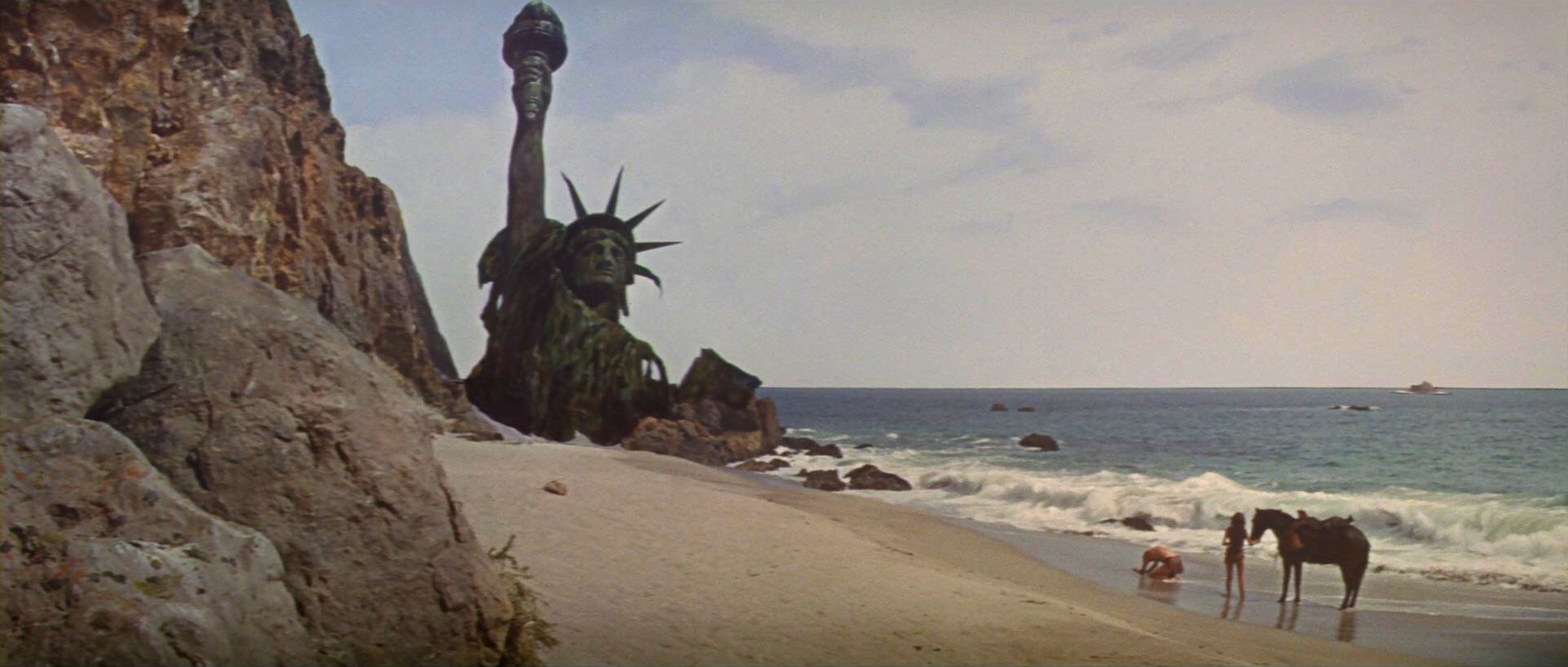
Still from closing scene of Planet of the Apes.
Now I don’t mean to be overly dramatic. But if scientists can’t convince the powers that be that our manner of inhabiting this planet is unskillful, perhaps artists can help conjur some sense of forboding.
It’s the beginnng of week three of post-Sandy life here in the New York/New Jersey metro region and plenty of people unfortunately are still suffering the effects. News coverage has focused national attention on the role of climate change in worsening the effects of the hurricane. But there’s another important lesson we shouldn’t miss: beaches are the most dynamic geomorphic feature on the surface of the Earth and we build fixed structures there at our peril.
My hero, Orrin Pilkey, professor emeritus of geology and of earth and ocean sciences at Duke University says that part of the problem is that “we scientists tend to be dullards when it comes to selling our case.” Nonetheless, we have a responsibility to try to do so. As a coastal geologist who has long advocated for retreat as a strategic response to beach erosion, Orrin has definitely done his part. Coining the term “New Jerseyization” to describe the results of unimpeded development and expensive attempts to stabilize beaches with sandbags, groins, jetties, seawalls or “renourish” them with pumped sand, Orrin has been as relentless as the sea in trying to make the point. Check out his warning in the October 1983 issue of Popular Science: “We have two mutually exclusive choices: beaches or buildings. We can’t have both.” And if you want even more on this subject, in The Corps and the Shore (1996) Pilkey and colleague Katharine Dixon examine comprehensively the impact of coastal processes on developed shorelines.
But the fundamental scientific fact is this: beaches move. Look at the image below to see the substantial westward migration of Breezy Point spit, Rockaway, Queens, New York in less than 150 years.NPS display at Fort Tilden NPS Visitors Center, Rockaway, Queens, NY
Like it or not, do not doubt that the future will provide photo-ops for Planet of the Ape-like shoreline scenes if we persist in arming beaches with sea walls, groins or jetties and continue to dump more sand on beaches from which we refuse to relocate. Will an artist please render that scientific fact?
Who Does’t Need a Sabbatical? November 13, 2012
Posted by Jill S. Schneiderman in sabbatical.2 comments

Listen! The Earth Breathes! November 8, 2012
Posted by Jill S. Schneiderman in Anthropocene, climate change, earth system science, Ecozoic, environmentalism, global warming, Hurricane Sandy, hydrologic cycle, science, sea-level rise, Teilhard de Chardin.2 comments
This piece appears in Shambhala SunSpace.
Like many millions of people around the world, I was captivated by President Barack Obama’s election night victory speech. And my heart cheered when I heard the President say, “we want our children to live in an America that…. isn’t threatened by the destructive power of a warming planet.” Maybe the Earth has now, finally, made itself heard on the issue of the disastrous implications of global warming for all beings that live on this planet.
I’ve always favored scientist James Lovelock’s Gaia hypothesis that organisms interact with their inorganic surroundings on Earth to form a self-regulating complex system that contributes to maintaining conditions for life on the planet. And I’ve also been a big fan of Vice-President Gore’s book, An Inconvenient Truth, especially because he makes so clear that the Earth actually breathes. “It’s as if the entire Earth takes a big breath in and out once each year,” he wrote in referring to the Keeling Curve, the diagram by scientist Charles David Keeling that shows not only the overall increase in CO2 in the atmosphere starting in the late 1950s based on measurements of atmospheric CO2 at Mauna Loa, Hawaii but also the annual cycle of increase and decrease of CO2 in the atmosphere that results from the growth and decay of vegetation.

And now at the risk of committing the sin of anthropomorphism (attributing human motivation to an inanimate subject), I’ll suggest that Earth itself cast a vote in this election.
Some pundits say that “Superstorm Sandy” helped the President win the election partly because of his compassionate and competent response to the crisis. I’m no poll, so I don’t know. I hope only that this election marks our movement into a new geologic Era thatJesuit paleontologist Teilhard de Chardin (1881-1955) once proposed: the Ecozoic, a new era of mutually enhancing human-earth relations.
In The Long Road Turns to Joy, Thich Nhat Hanh wrote:
You will be like the tree of life.
Your leaves, trunk, branches,
And the blossoms of your soul
Will be fresh and beautiful,
Once you enter the practice of
Earth Touching.
May the re-election of Barack Obama usher in the Ecozoic Era, a period in which we listen attentively to what the Earth tells us and live the understanding that we breathing humans are the breathing Earth.
From Science and Art, Global Warming is Real November 2, 2012
Posted by Jill S. Schneiderman in Anthropocene, art, climate change, disasters, global warming, Hurricane Sandy, science, sea-level rise.add a comment
So what if global warming isn’t directly responsible for “superstorm Sandy”? Let’s not get hung up on that minor detail.
Because the planet has warmed–the average surface temperature of the Earth rose 1.08°F to 1.62°F (0.6 to 0.9 °C) between 1906 and 2006— the cryosphere has melted, moving H2O from the ice caps to the oceans.

Markers show the dramatic retreat of the
Athabasca Glacier, photo Judd Patterson
And seawater has literally expanded. As a result, sea level has risen—worldwide measurements of sea level show a rise of about 0.56 feet ((0.17 meters) during the twentieth century.
Earlier this week Hurricane Sandy pushed the sea onto land in coastal regions that are today more “low-lying” than they were a century ago. Images are still coming in of the devastation caused by such mass movement of water along parts of the northeastern coast. Earth behaved as predicted and revealed the increased risk to which we have subjected ourselves.
At a time when scientists have been convicted of not making good predictions may I be the first to congratulate Dr. Jianjun Yin, a climate modeler at the Center for Ocean-Atmospheric Prediction Studies (COAPS) at Florida State University, and colleagues Michael Schlesinger of the University of Illinois at Urbana-Champaign and Ronald Stouffer of Geophysical Fluid Dynamics Laboratory at Princeton University? In 2009 these folks published their analysis of data from ten state-of-the-art climate models and warned that, considering its population density and the potential socioeconomic consequences of such changes, the northeast coast of the U.S. is one of the areas most vulnerable to changes in sea level and ocean circulation.
Yin and his colleagues advised that, since much of the New York City metro region is less than 16 feet above mean sea level—with some parts of lower Manhattan only about 5 feet above it—a sea level rise of eight inches could be catastrophic. New York City would be at great risk, they added, for damage from hurricanes and winter storm surge (emphasis mine). Yin et al are the Hurricane Sandy analogs of scientists at Louisiana State University whose models of storm tracks led a reporter for Scientific American to presage in 2001 “New Orleans is a disaster waiting to happen.”
Yin’s study, “Model Projections of Rapid Sea-Level Rise on the Northeast Coast of the United States,” produced this artist’s rendering of a flooded Manhattan.

But the images below are no artist’s rendering. They are photographs of water inundating the Metropolitan Transportation Authority’s new South Ferry Terminal.


The trees and map along the walls are part of a site-specific art installation, See it Split, See it Change (2005-2008) made of fused glass, mosaic marble, and stainless steel by Doug and Mike Starn. The work of these artists has articulated themes of impermanence and transience.
Let’s heed the message from both science and art. Can we all just pay attention to the Earth?
Being (noun); Human (adjective) October 25, 2012
Posted by Jill S. Schneiderman in Buddhist concepts, Buddhist practice, contemplative practice, earth community, geology, mindfulness practice, slow violence.1 comment so far
This piece was published by Shambhala SunSpace on October 25.
Trying out a new set of phrases for focusing my attention while sitting a four-day retreat with colleagues from the Association for Contemplative Mind in Higher Education, I sat on a rock ledge at the Garrison Institute, eyes softly resting on the castle rumored to have been the inspiration for the one in The Wizard of Oz.

“Breathing in, I am aware that I am breathing in; breathing out, I am aware that I am breathing out.”
The castle has long been owned and occupied by the Osborn clan, whose ancestors are not only railroad tycoons but also some scientists — among them geologist and director of the American Museum of Natural History for a quarter century, Henry Fairfield Osborn (1857-1935) as well as conservationist and president of the New York Zoological Society Henry Fairfiled Osborn, Jr. (1887-1969).
A red-tailed hawk sailed in the cloudless, powder blue sky, and the broad leaves of a tulip poplar rustled among the other leaves in robust autumn color. And the thought once again occurred to me: human being is no compound noun; being is the noun, human is just an adjective.
And then my mind wandered to the beings I find in my backyard most days of the week:
Cat, orange;
Chicken, white leghorn;
Deer, white-tailed;
Dog, stray;
Fox, kit;
Heron, great blue;
Maple, norway;
Owl, barred;
Spider, jumping;
Squirrel, gray;
Turtle, snapping;
Woodpecker, red-bellied
All of them beings, living.
When our group came out of silence, we spent a bit of time talking about how our contemplative practices affect us as teachers. One of the more concrete effects the practice has had on me is that in my geology courses, when talking about organisms, I no longer refer to “living things.” Rather, though sometimes sounding odd to my students, I talk about other organisms as “living beings.”
I owe this shift in perspective to the Metta Sutta (the Buddha’s words on kindness)
Wishing: In gladness and in safety,
May all beings be at ease.
Some years ago after reciting the sutta in the course of metta practice (wishing ease for all beings), I experienced this epiphany. Now, all that lives and has lived on this planet is abeing to me, not a thing. And we share this Earth with multitudes of these beings. We need only be still in one place long enough to notice them. For those interested in such an endeavor, check out The Forest Unseen, biologist David Haskell’s observations over the course of one year of a single square meter of forest in Tennessee.
Have you had this kind of perspective-shifting experience as a result of your sitting practice? I’d love to know. In the meantime, may all beings live with ease.
Predictably Unpredictable Earthquakes Require Compassion, Not Conviction October 25, 2012
Posted by Jill S. Schneiderman in Buddhist concepts, Buddhist practice, contemplative practice, earth community, earth system science, earthquakes, environmentalism, mindfulness practice, science.1 comment so far
Published on Wednesday, October 24, 2012 by Common Dreams and October 25 by Truthout.

Militaries, Mammals and Spiritual Science October 14, 2012
Posted by Jill S. Schneiderman in Anthropocene, earth community, earth system science, environmentalism, science, slow violence, Thomas Berry.add a comment
This piece is cross-posted at Truthout.org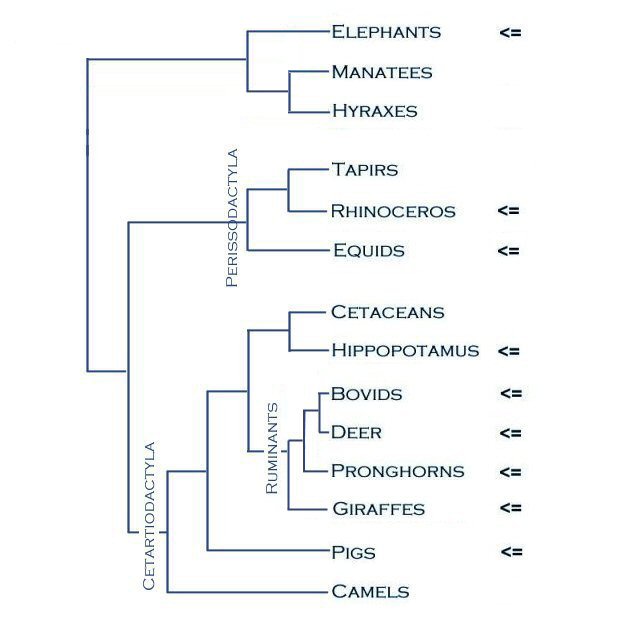 Though not as closely related as they are to hippos, whales have much in common with elephants. Speaking scientifically, they belong to different taxonomic orders–whales to the taxonomic order Cetacea and elephants to the order Proboscidea, but they come from a common ancestor with hoofs and are therefore distinct from other orders of mammals such as primates or rodents. Of course, they both are large, intelligent, social mammals and they share a precarious existence.
Therefore, I was glad to read a New York Times op-ed this morning that condemned the plan of the U.S. Navy to carry out tests and exercises using explosives and sonar devices in the Earth’s major oceans during the five-year period 2014-2019. The Navy estimates that this military activity will negatively affect 33 million marine mammals. Reading this caused my mind to wander back to the stories I read in the Times last month about the widespread slaughter of elephants by members of African militias who remove the ivory tusks and sell them to purchase weapons. Though the butchery of elephants by African militaries is bloodier business than effects such as temporary hearing loss and ruptured eardrums of marine mammals that the U.S. Navy deems “negligible,” I can’t help but think that Earth is in the dire shape it is today because of this type of behavior.
Listen to Krista Tippett’s interview with Dr. Katy Payne, an acoustic biologist attributed with discovering that humpback whales compose ever-changing songs to communicate, and understanding that elephants communicate with one another across long distances by infrasound. One can’t help but be heartbroken at the suffering experienced by these sophisticated beings as a result of such unjustifiable military activities–legal and illegal, in the sea or on land, by developed or developing nations. Dr. Payne comments:
“My sense is that community responsibility, when it’s managed well, results in peace. And peace benefits everyone. That taking care of someone or something to which you are not immediately genetically related pays you back in other dimensions, and the payback is part of your well-being. Compassion is useful and beneficial for all.”
In my opinion, human societies must grow a generation of spiritual scientists who, like Katy Payne, respond emotionally to their scientific work and can try to help change the path down which this planet is headed.
I don’t know if he knew her but I bet Thomas Berry (1914-2009) would have loved Katy Payne. Berry, a leading scholar, cultural historian, and Catholic priest who called himself a “geologian”, spent fifty years writing about our relationship with the Earth and urging humanity to save the natural world in order to save itself. In his last book, The Sacred Universe, he wrote that we must respond to its [the Earth’s] deepest spiritual content or else submit to the devastation that is before us. He dreamed of a new geological Era, the Ecozoic, in which “humans will be present to the Earth in a mutually enhancing manner.”
When it comes to other beings on planet Earth, scientists must do more than articulate their observations of other organisms as if with objectivity. Elephants and whales, along with other marine mammals, are more than “stocks” of resources, as some governments would have us believe. They are living beings with systems of communications and social relations to whom we are connected. Recognition of such connection puts us in touch with the fact that, in Berry’s words, “the universe is a communion of subjects, not a collection of objects.” Can someone please tell the Navy?
Interdisciplinary Science for the Public Good Brought to you by Dr. Beth Feingold October 11, 2012
Posted by Jill S. Schneiderman in environmental justice.add a comment
Beth Feingold, PhD, MPH, MESc, Vassar geology class of 2001 is lead author of the study:
“Livestock Density as Risk Factor for Livestock-associated Methicillin-Resistant Staphylococcus aureus, the Netherlands.”
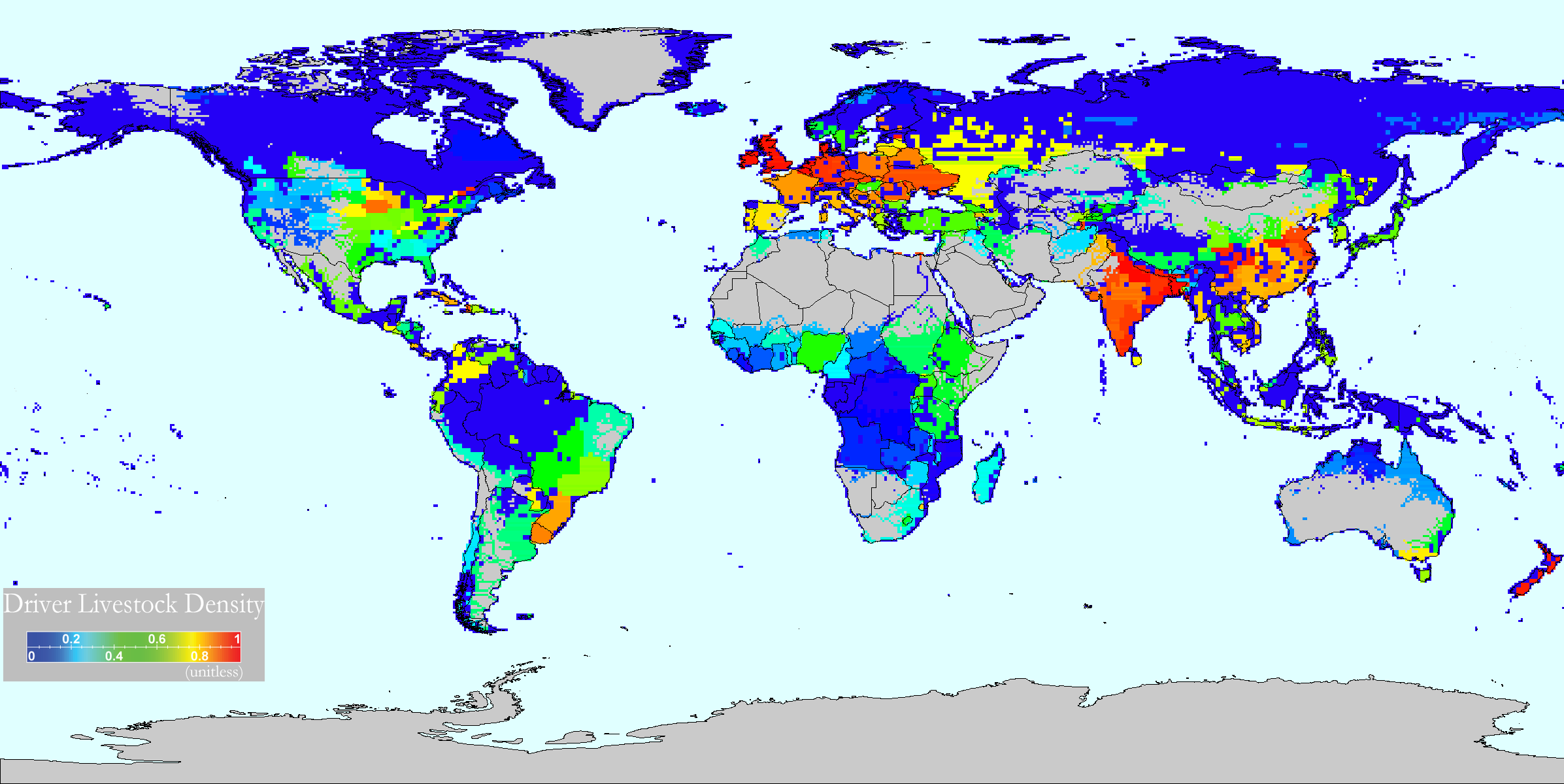
This important study shows that people who live near livestock or in livestock farming communities may be at greater risk of acquiring, Methicillin-resistant Staphylococcus Aureus (MRSA), a type of staph bacteria that is resistant to penicillin and certain first-line antibiotics.
Barry Commoner: A Feminist Environmentalist October 3, 2012
Posted by Jill S. Schneiderman in Barry Commoner, connectthedotsmovement.org, earth community, environmental justice, environmentalism, feminism, fracking, Precautionary Principle, Sandra Steingraber.3 comments
This is cross-posted at CommonDreams.org, SpeakOut, and RH Reality Check.
When, as a 21-year-old geology major I chose scientist and activist Barry Commoner as my presidential candidate, I was lambasted by some of my lesbian sisters at Yale for wasting my vote. But upon reading his obituary in the New York Times, I feel proud of the choice I made back then. Barry Commoner, who died September 30, deserves to be remembered as a visionary scientific thinker who advocated for connecting the dots between components in systems of oppression. Barry Commoner, who died on Sunday at the age of 95.
I’d like to remember Commoner as a feminist environmentalist. Why? For one thing, Commoner split with conservation groups like the Sierra Club and the National Wildlife Federation who subscribed to Paul Ehrlich’s theories articulated in The Population Bomb. These organizations, at the time, essentially blamed women for enviromental degradation asserting that it was a byproduct of overpopulation. Commoner was a scientist of the Rachel Carson variety. As the Times put it, his overarching concern was “a radical ideal of social justice in which everything was indeed connected to everything else… He insisted that the planet’s future depended on industry’s learning not to make messes in the first place, rather than on trying to clean them up.”
This line of thinking leads directly to scientists and activists today who insist on seeing the connections between energy, transportation, agricultural and industrial systems that emphasize technological progress and financial profits disregarding consequences such as groundwater contamination, global climate change, and the health of all living beings. Too, Commoner could well be remembered as the direct ancestor of scientists today like Sandra Steingraber, a signatory of the Wingspread Statement on the Precautionary Principle, a scientist who has devoted her life to explaining the ways that chemical contaminants endanger health, and who currently leads the fight in New York against fracking. For Commoner planted the seed for precaution with his precept that “Preventing a disease is far more efficient than treating it.”
And I don’t know if in his late years Commoner was aware of the work of activist Ashley Maier, cofounder of Connect the Dots, an organization that uses the social-ecological model, that individuals live within multiple spheres of influence, to address connections between environment, human and animal well-being. But I’d like to think that his longevity might have been connected to the hope he could have derived from the work of younger activists like Maier.
Though I never spoke with my graduate school mentor, paleontologist Stephen Jay Gould, about Commoner, it didn’t surprise me to read his comment in a review of Commoner’s book, Making Peace with the Planet, that it “suffers the commonest of unkind fates: to be so self-evidently true and just that we pass it by as a twice-told tale.” Though he eschewed the politics of science, Steve’s view that Commoner was “right and compassionate on nearly every major issue” rings true as we contemplate as obvious yet imperative Commoner’s prescription of solar energy, electric-powered vehicles, and massive recycling programs, among others, as components of a plan to reverse the formidable, “radically wrong” path of the planet.
 earthdharma.org