Awake in the Anthropocene May 12, 2011
Posted by Jill S. Schneiderman in Anthropocene, Buddhist concepts, earth cycles, geology.add a comment

The Indus and the Karakoram highway in N. Pakistan
Because of the extended time frame over which they occur, human-induced environmental changes—increased temperature, rising sea level, high-energy storm patterns, desertification and drought—are out of sync with human lives lived in an age of short attention span. The violence exacted on all living beings by these changes poses real representational challenges to our abilities to address it. Are there any tools within Buddhist view and practice that can help us work progressively at the intersection of violence and environmental degradation? How can Buddhism facilitate the work of awakening human beings to violence that is potentially catastrophic, but so slow that it’s difficult to discern and counter?
Read the rest of this piece, a featured article from Ecological Buddhism: A Buddhist Response to Global Warming, here.
Natural Gas and Horizontal Shale Drilling April 27, 2011
Posted by Jill S. Schneiderman in fracking, natural gas, Precautionary Principle, shale.add a comment
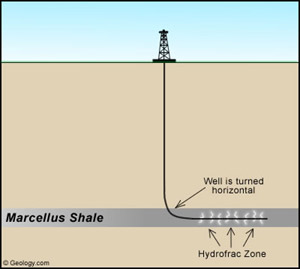
Here’s a link to a short video from the American Petroleum Institute about hydrofracking of ‘tight’ shales in order to release and collect natural gas. I have not as much time as I would like to write about this video and I hope to do so in the future. The small point I would like to make is that though this video is designed to reassure the viewer that the technology is safe, I do not react to it that way. I watch this video and feel sad.
I think we must pay attention to lingo used by engineers when it comes to these so-called advanced technologies. Engineers and the public relations people who work with them come up with terms that attempt to make something terribly complex and uncertain seem simple and sure. Perforating rock by using explosive materials inserted deep into the earth is called “perfing”; Fracturing fine-grained rock that has lithified over millions of years is called “fracking’. The gas that is released is collected by a permanent well-head device called a “Christmas tree.” They make it sound not only simple but benign but to me this seems a good moment to practice the precautionary principle.
This Month in the Earth Year: April April 26, 2011
Posted by Jill S. Schneiderman in cyanobacteria, earth community, earth system science, geologic time, geology, science, stromatolites.add a comment

The last bits of snow have disappeared from the piles we plowed this winter and the daffodils have poked up through the defrosting topsoil, so it’s relatively easy to get a sense of time passing in our day-to-day lives. And at this time of year, when some readers may think that, as is often said, the only things certain in life are death and taxes, I’d like to add to that expression the existence of an ever-evolving Earth. For if we take the calendar year as a metaphor for the age of this planet, using January 1 as the date of its formation, by the end of April only 1.5 billion years of Earth history will have transpired. That may seem like quite a bit of time but if we gauge the passing of geologic time by looking for milestones in Earth history, it’s easy to see that Earth time is deep.
April is an auspicious period in the planet’s metaphorical history. The Archean. If you time-traveled to April of the Earth year it’s likely you wouldn’t recognize the Earth as the same planet we inhabit today. The Earth’s crust would have cooled enough so that continents had begun to form, but the similarities to today’s Earth would have ended there. To sustain a visit to the Archean, you’d need to have brought with you a supply of oxygen, for the atmosphere would have been unbreathable. Consisting of methane and ammonia, among other gases, the Archean atmosphere would have been toxic to most of the life that exists on our planet today.
Nonetheless, the first life that appeared on Earth—cyanobacteria— lived in the Archean. 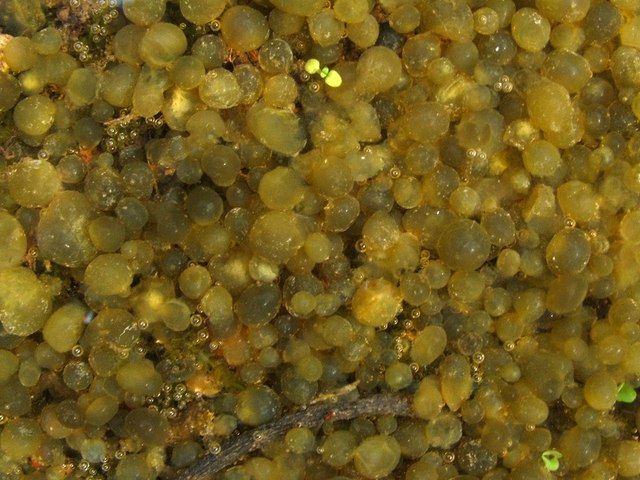 In fact, the oldest known fossils date to this slice of time. The bacteria that grew in the Archean seas left behind large layered mounds called stromatolites that formed as the colonies trapped sediment and secreted calcium carbonate.
 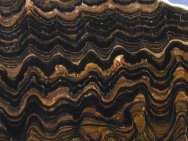 Though stromatolites don’t commonly develop in today’s seas–because too many other organisms are around to eat them–those simple bacteria are still here, like death and taxes.
White Flags for Earth Day April 22, 2011
Posted by Jill S. Schneiderman in 'Eaarth' Day, earth community, earth cycles, earth system science, environmentalism, geologic time, Vassar College, White Flags.add a comment

As I’ve said before, I am somewhat cynical about Earth Day because it seems to me a travesty to focus on the Earth’s well-being just one day out of every year. It makes it seem as if Earth is some kind of static entity that we must pay tribute to whereas we know it to be a system of overlapping spheres (hydrosphere, atmosphere, rock sphere, and biosphere) whose interactions over extended time have made possible life on this planet. This is a fact that, in my opinion, we all should pause to appreciate every day.
So this Earth Day I’d like to call attention to “White Flags”–a project of Vassar’s 2010/2011 artist in residence, Aaron Fein. “White Flags”–all 192 flags of United Nations member states hand-made in white and installed on the College’s Chapel lawn–showcases the power of a physical environment that changes over time to illumine the transcendent connectedness of all living beings on this planet.
I’ve seen the flags and have been privileged to participate a bit in the project which is at the confluence of art and science. If you’re in the area, come see it between April 24 and April 29 at the College. It should be a magnificent sight.
About a Poem: Jill S. Schneiderman on Donald Rothberg’s “Tomato” April 5, 2011
Posted by Jill S. Schneiderman in contemplative practice, environmental justice, environmentalism, food justice, mindfulness practice.add a comment
From Shambhala Sun | May 2011
You’ll find this article on page 96 of the magazine.

TOMATO
Tomato in my salad bowl
Is all there is.
Big as a watermelon,
big as the earth,
big as my mind.
Glistening, shining, with
time’s still rush,
We’re locked together
for this part of eternity,
Tomato and me.
I feel taken into
the cherry tomato roundness,
orange redness,
its fact of existing.
I’ve never known
a tomato
quite like this.
This could go on a long time,
It’s so compelling.
I’m becoming tomato,
Tomato me.
Who’ll blink first, me or tomato?
It is said that
“Freedom is not needing to know what comes next.”
I eat it.
Then,
I notice a leaf of lettuce.
———————————————————-
Slowly consuming a raisin often serves as an introductory exercise in the practice of mindful eating. But for me, there’s nothing like paying attention to a homegrown tomato. So when tomato season came to a close and I resumed my teaching on environmentalism and social justice, I delighted in this poem by Donald Rothberg, a teacher of socially engaged Buddhism. I thought, “Tomato” could be an anthem for twenty-first-century environmentalists because, as my friend John Elder, a teacher of American nature writing, says, the Slow Food movement will be to twenty-first century environmentalism what wilderness preservation was to its twentieth-century precursor—the nexus of progressive action.
As the Western frontier of the United States disappeared in the late-nineteenth century, naturalists like John Muir worked to preserve areas they deemed “wilderness;” consequently, national parks exist today. But elitism tainted that movement, and women and people of color avoided it. Later, in the twentieth century, a new environmentalism prioritized concern for social justice. In the seventies, feminists revealed connections between the exploitation of nature and the oppression of women and other groups who were considered secondary in society. Building on those ideas, contemporary environmental justice activists have exposed how communities of color and low-income urban dwellers are the primary bearers of environmental ills. Unnatural disasters following Hurricane Katrina and the Port-au-Prince earthquake, for example, have highlighted this.
Today the Slow Food movement excites populations of racially and economically diverse young people largely unencumbered by traditional gender roles. Heightening awareness of the connection between food and environment, the movement has the potential to galvanize others because it unites pleasure with responsibility. “Kill me along with this tree I occupy” or “Taste this tomato!” Which rallying cry do you think will encourage others to embrace environmental awareness? My students are choosing the latter.
What we eat and how we come by it matters to every living being and therefore constitutes a unifying theme for a lasting and socially just environmentalism. With its emphasis on stillness and sufficiency, Buddhism has much to offer this new environmentalism. Slow Food is about paying attention to what we eat and how we produce it—in other words, being mindful about consumption. In my opinion, whether we’re consuming raisins or tomatoes, socially engaged Buddhists can share with others the powerful practice of mindful eating.
Jill Schneiderman is professor of earth science at Vassar College in Poughkeepsie, New York, and editor of The Earth Around Us: Maintaining a Livable Planet.
As seen in the May 2011 issue of the Shambhala Sun. Click here to browse the entire issue online.
Radioactivity, science, and spirit March 31, 2011
Posted by Jill S. Schneiderman in book review, Buddhist practice, contemplative practice, disasters, earth community, Japan, meditation, radioactivity, science, Tsunamis.add a comment
This piece is cross-posted at Shambhala SunSpace and at Being.
Radioactivity. Life. Death. These are front-and-center in my thoughts these days as I contemplate the fallout from the nuclear plant meltdown generated by power outages, triggered by a tsunami, set off by an earthquake in Japan. Amidst these events, I turned my attention to reading Radioactive: Marie & Pierre Curie, A Tale of Love and Fallout by Lauren Redniss.
Currently, the book is on exhibit at the New York Public Library. The author, an artist, teaches documentary, drawing, graphic novels, and printmaking at the Parsons School of Design, so one might be excused from not immediately recognizing the logic of her having written a book on the Curies (who shared with Henri Becquerel the1903 Nobel Prize in physics for their research on radiation.) But there’s little that is logical about the way this story reveals itself and that’s what makes it beautiful and such a pleasure to read. The book is a piece of art composed of images and words. Although told in roughly chronological fashion, mostly the story has long tendrils of other tales. In this regard as well as others, I suspect it will be of interest to people fascinated by the intersections of science and mind.
 Here’s what I liked about it. To me, the format ofRadioactive mimics the way a mind—mine at least–works. All of us dedicated to a regular sitting practice know that just a few breaths into a sit, the mind is likely to take an excursion, follow an idea. After some time we wake up to the fact of our distraction and come back to focusing on the breath. It is in this manner that the story of the Curies, their colleagues, friends, enemies, lovers, and offspring unfolds. Unlike histories of science or biographies of scientists that are so often linear and wordy, this one provides multiple pursuable pathways.
Even if they know little else, most people know that Marie Skłodowska Curie was the first woman to be awarded a Nobel Prize. They may also know that her first Nobel in physics was followed by a second in 1911 in chemistry for the discovery of the elements radium and polonium. But the story of Marie and Pierre Curie is much more interesting than that plain fact. It involves a stimulating partnership of spouses engaged by the same scientific questions; infatuation with the invisible; Marie’s scandalous love affair after her husband’s accidental death by horse-drawn carriage; an ongoing commitment to scientific and medical investigations that ultimately killed her, and offspring—both biological and scientific—who have carried on their work. And in Radioactive, entwined images and prose create a fabric that relates the stories of the Curies to more modern-day concerns: Three Mile Island, Chernobyl and two World Wars. Redniss indulges her readers with haunting cyanotype and archival images offered up in nonlinear fashion; this is a boon for right-brainers such as I whose minds tend toward wandering.
A most fascinating facet of the book tells of the Curie’s explorations in Spiritualism—a movement that suggested the possibility of contact with the divine. As Redniss tells it:
Electricity, radio, the telegraph, the X-ray, and now, radioactivity—at the turn of the twentieth century a series of invisible forces were radically transforming daily life. These advances were dazzling and disorienting: for some, they blurred the boundary between science and magic….Spiritualists claimed that clairvoyants possessed “X-gazes,” and that photographic plates placed on the forehead could record vital forces of the brain, or “V-rays.”
The Curies and their circle—including leading artists, writers, and scientists such as Edvard Munch, Arthur Conan Doyle, Henri Poincare, Alexander Graham Bell—participated in the Spiritualist séances of Italian medium Eusapia Palladino and considered it possible to find in spiritualism the origin of unknown energy that might relate to radioactivity. In fact, as Susan Quinn recounts in Marie Curie: A Life, just prior to his death Pierre Curie wrote to physicist Louis Georges Gouy about his last séance with Palladino “There is here, in my opinion, a whole domain of entirely new facts and physical states in space of which we have no conception.”
Both scientists and spiritualists believed that there was much that exists in the world that cannot be seen by the naked eyes of humans.
Radioactive is a story of mystery and magic as well as a history of science and invention. It shows how science, so often thought of as motivated by passionate rationality, is equally about marvelous ambiguity. The Curies, perhaps influenced by their encounters with spiritualism, devoted their lives to the search for evidence of phenomena they could not see but that they believed existed. The implications of what they found—the good and the bad, medical innovation and nuclear proliferation—they couldn’t fully anticipate.
A recent New York Times article about nuclear energy, “Preparing for Everything, Except the Unknown,” states the obvious: experts say it is impossible to prepare for everything. As a mindfulness practitioner I’d like to offer a corollary to that statement: when we sit seemingly doing nothing, plenty happens—we don’t see it, but we sense it. Redniss’s history of the lives of Marie and Pierre Curie inspires me as a scientist to continue to pursue my mindfulness practice.


Trackbacks are closed, but you can post a comment.
Japan in my thoughts March 17, 2011
Posted by Jill S. Schneiderman in disasters, earthquakes, geology, Japan, Tsunamis.add a comment
For those of you interested in the science of earthquakes and tsunamis, you may be interested in this recent piece from Scientific American. It features an interview with my colleague Greg Valentine, geology professor and director of the University at Buffalo, The State University of New York Center for GeoHazards Studies. Also, if you would like to follow developments in the science of tsunamis, I recommend my colleague Brian McAdoo’s The Tsunami Project: Transdisciplinary Approaches to Disaster Risk Reduction.
The Science of Earthquakes and Tsunamis March 15, 2011
Posted by Jill S. Schneiderman in earthquakes, geology, Japan, science, U.S. Geological Survey.add a comment
For those readers interested in the geoscience behind the events in Japan, I can recommend CoreCast from the U.S. Geological Survey; this episode provides an informative interview with USGS geophysicists Bill Ellsworth and Eric Geist on the mechanisms of the earthquake and tsunami.
The Japan Earthquake: Healing After Trauma March 14, 2011
Posted by Jill S. Schneiderman in disasters, earth community, earth system science, earthquakes, geology, Japan, science.add a comment
This piece is cross-posted at Shambhala SunSpace and Common Dreams.
I just returned from a weeklong spring break field trip in West Texas with my geology students to news of the 8.9 (now upgraded to 9.0) magnitude earthquake, and related 30-foot tsunami, nuclear reactor explosion and meltdowns, and oil refinery fire in Japan. In the El Paso airport on March 12, I picked up a copy of The Wall Street Journal to find out more about the events. The images of buildings, boats and other transport vehicles tossed willy-nilly by seawater—like toys swept aside by a frustrated child—took my breath away; they impressed on me yet again the spatial magnitude of Earth’s powerful forces.
I appreciated the clear rendering of the mechanisms of the quake and consequent tsunami— subduction of the Pacific plate beneath this outpost of the North American plate with massive uplift of the seafloor and displacement of voluminous amounts of seawater. Reporters for the Journalcontextualized the historic proportions of the seismic event (the fifth-largest recorded earthquake in the past century and the biggest in Japan in three hundred years); they lauded the country’s high degree of earthquake preparedness.
What struck me most, however was the extensive coverage of the economic implications of the quake for the global economy and speculations about how quickly life in and beyond Japan could get back to normal especially in terms of industrial and technological production. Of course I realize that business and financial news is that paper’s focus, nonetheless, I’d like to take the opportunity offered by this recent cascade of events to highlight a lesson that I think the Earth offers about reactions to stresses that can traumatize all living beings.
As readers of this blog know, I’m a seeker of Earth dharma—examples of Earth processes that resound with the wisdom of dharma teachers. For me, this recent temblor echoes teachings related to the devastating effects of the build-up of stress on a body and mindful approaches to healing.
In this seismic event, a locked fracture at the juncture of two lithospheric plates caused strain to accumulate in the rocks beneath the sea near the east coast of Honshu, Japan. It was released catastrophically as images of demolished landscapes and towns continue to show. As one geophysicist put it, “the rocks cracked under the pressure.”
I find it impossible not to take this as a metaphor for the effect on the human body of stress accumulated over the long-term and extract from it ideas about the delicacy of healing after such crises on earth. I’m sure others must have the same impulse but I feel especially inclined to it just coming off this field trip which took me to, among other places, Carlsbad Caverns (in New Mexico, just over the Texas border).
The moist, cool, subterranean world of Carlsbad Caverns beneath the rugged, desert landscape is an unparalleled realm of colossal chambers and extraordinary cave formations (known to geologists as speleothems). Formed a few million years ago by the dissolution of parts of a much older reef—the remains of sponges, algae and other marine invertebrate organisms that lived during the late Paleozoic—and then decorated beginning around 500,000 years ago, drop by drop, with crystals of calcite, steep passages connecting horizontal levels provide access to the Earth’s shallow interior.
While walking along the dimly lit paths through the caverns, I pointed out to one my medical school-bound students, “popcorn” speleothems precipitated so as to resemble, in my view, the alveoli of human lungs.
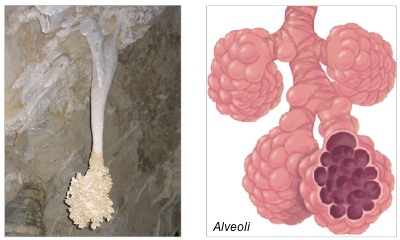
She marveled at the formation along with me. Then, further down the trail commented, “I feel like I’m walking inside the body of the Earth.” I couldn’t have agreed more.
Upon learning of the Japan quake, President Obama said at a news conference, “Today’s events remind us of just how fragile life can be.” Ostensibly sturdy, our Earth and all living beings on it are really quite delicate. The Prime Minister of Japan asserted that the current situation is the most severe crisis the country has faced since World War II and one that, in his words, will require people to join together in order to overcome the catastrophe. I agree that people will need to cooperate with one another but I think also that the current situation requires honesty (what is happening at those damaged reactors?) and patience. Is a focus on the possible effects of the catastrophe on the global economy a compassionate first response?
This portion of the Earth and the people who live there have experienced what my colleague David Applegate, senior science adviser for earthquakes at the U.S. Geological Survey has called a “low probability, high consequence” event. Foremost among my responses to the crisis, fresh from my recent intimate encounter with the Earth, is the wish that all living beings effected by this trauma be healed over the course of time.
The Anthropocene March 3, 2011
Posted by Jill S. Schneiderman in Anthropocene, geologic time.add a comment
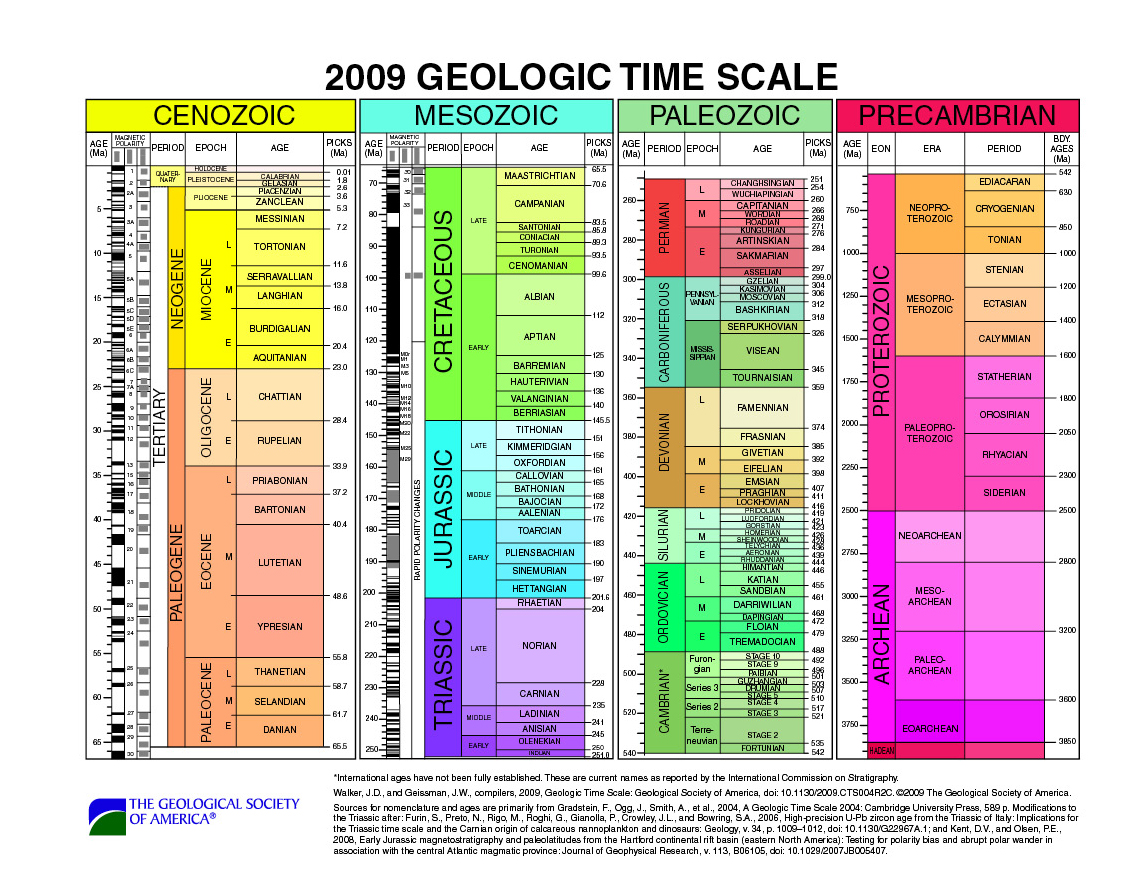
I’m about to head out to West Texas on a geology field trip with a group of sedimentology students, a colleague, and my 10 year old child in order to look at sedimentary rocks formed hundreds of millions of years ago. If I weren’t leaving shortly I’d take more time to write about the February 27 New York Times editorial that broadcasts what should be (but is not) widely known. We live in a geological time period that we used to call the Holocene (the Recent). The New York Times echoes what a few scientists have been saying for a while now: it’s not the Holocene, it’s the Anthropocene. I explain this further in my May 20, 2010 comments on this blog.
 earthdharma.org