Earth, Mars, and Meteorites Inter-Are October 1, 2012
Posted by Jill S. Schneiderman in Buddhist concepts, earth community, geology, Iron Man/Space Buddha, Mars, meteorites, Norman Fischer, science, Thich Nhat Hanh.add a comment
This piece is cross-posted on Shambhala SunSpace.

Credit: Dr. Elmar Buchner
While discussing the five skandhas (aspects) that constitute a human being during a dharma talk on The Heart Sutra—a core Buddhist text—renowned Zen teacher Norman Fischer commented that although we don’t need science to confirm the veracity of what we think to be true, it’s nice when it happens that way.
Recently some extraterrestrial data sources corroborated for me what my beginner’s mind thinks The Heart Sutra teaches—that all phenomena are expressions of emptiness. Fischer says this teaching on emptiness is really a teaching about connection. Emptiness, he says, refers to the emptiness of any separation and therefore to the radical connection or interdependence of all things.
Thich Nhat Hanh coined the term “interbeing” to express this idea that no thing arises independently. As he described in The Heart of Understanding, there is only the constant arising of the universe (which etymologically means “turned into one”)—each so-called thing enables every other so-called thing. News of the past weeks from both Mars and the asteroid belt confirm such connection between Earth and our neighbors in the solar system.
Ever since it landed in Mars’ Gale Crater in early August I’ve been following the discoveries of NASA’s Curiosity rover (a car-sized, six-wheeled robot), the $2.5 billion Mars Science Laboratory whose mission is to see if the red planet ever could have supported small life forms called microbes. The photos the rover sends back are mesmerizing and the discoveries tremendously exciting for they show that the material substance and processes of Mars are the material substance and processes of Earth.
Curiosity’s discoveries in the past months repeatedly reveal rocks and rock formations that are similar maybe even the same, as what we see on Earth. For example, the first rock analyzed chemically by Curiosity, just for the sake of target practice and dubbed “Coronation,” turns out to be basalt. This is no more spiritually surprising than it is scientifically surprising: this type of volcanic rock is common on Earth and Earth’s moon as well as known from previous missions to Mars to be abundant there.
In at least three sites, visual observations by Curiosity’s high-resolution imager reveal sedimentary conglomerate—a rock composed of compacted and rounded gravels naturally cemented together. We know from geological observations on Earth that water transport is the only process capable of producing the rounded shape of rock fragments this size. Curiosity has found evidence of an ancient Martian streambed!

Image credit: NASA/JPL-Caltech/MSSS and PSI
Listen to Rebecca Williams of the Planetary Space Institute describe these findings. Williams is able to offer her lucid explanation because Curiosity is seeing on Mars the same materials and processes we are accustomed to seeing on Earth.
And as if I were not already convinced of the truth of The Heart Sutra, word arrived that a one thousand year old Buddhist statue taken during a Nazi expedition in 1938 turned up five years ago and was analyzed by planetary scientists in Germany.
Guess what the monument is carved from: iron meteorite, a piece of a meteor from the asteroid belt. Okay, so this piece of iron meteorite has an unusual composition. It’s an especially nickel- and cobalt-rich variety and so is easily traced to the Chinga meteorite that 15,000 years ago smashed into the border area between Mongolia and Siberia. Nonetheless, this “Iron Man” was carved from a piece of space rock whose major elements, iron and nickel, are the very same elements that make up the core of Earth.
Not that we need science to confirm that what we think is true. We’ve also got the wisdom of the ancients. Earth, Mars, and meteorites, for example, inter-are.
Taking the Practice Seriously June 19, 2012
Posted by Jill S. Schneiderman in Buddhist practice, meditation, mindfulness practice, monastery, Thomas Berry, Vassar College.add a comment
This piece is cross-posted on Shambhala SunSpace.
Shambhala SunSpace blogger Jill S. Schneiderman noticed an interesting article in the New York Times yesterday. And she wasn’t the only one; James Atlas’ “Buddhists’ Delight” is currently the most-emailed story on the Times site. (And interestingly enough, the Washington Post published an American-Buddhism piece yesterday, too.) Here Schneiderman responds to Atlas’s piece.
.

Tengboche Buddhist monastery, Nepal (via Creative Commons)
Yesterday I read “Buddhists’ Delight,” an opinion piece in the Sunday New York Timesby James Atlas, a long-time literary journalist who has written for the New Yorker and published a biography of Saul Bellow. In the piece Atlas describes four days he spent at a Buddhist meditation center “in retreat, from a frenetic Manhattan life.” It’s obvious from the essay that Atlas brought “beginner’s mind” to the retreat and his report of this first encounter with Buddhist meditation is pretty insightful. Atlas’ piece is a good introduction to the experience and I intend to give it to friends who are contemplating the possibility of sitting a multi-day retreat. Nonetheless, as experienced meditators know, there’s more to meditation than beginners may realize.
So although it’s a bit outside my usual bailiwick of earth science and dharma, I wanted to add to Atlas’ observations from my position as a professional educator who is convinced that the practice of meditation is not only powerful but crucial to the rehabilitation of a society and planet in critically ill condition. Atlas recognizes that meditation is an important tool for individuals trying to cope with the insane state of our world; he even notes the heft of Engaged Buddhism.
While sitting this morning I heard the carillon ring the early morning hour and I felt grateful, as I always do, to the monastic traditions that created the institution of the Monastery, the precursor to the modern University. Though most universities today have lost the spiritual dimension that once accompanied the educational mission of the Monastery, as an educator today, I aspire to reclaim the spiritual as a legitimate dimension of higher education.
As a regular practitioner and frequent retreatant at the Garrison Institute, I have experienced the transformational power of meditation that Atlas reports having sensed while he was on retreat in Vermont. Though as a beginner in the practice he may not realize it, Atlas has tapped into what multitudes of more experienced meditators know: meditation transforms minds and lives.
In “The University” a chapter in his book The Great Work: Our Way Into the Future, ecotheologian Thomas Berry admonishes readers that universities should “reorient the human community toward a greater awareness that the human exists, survives, and becomes whole only within the single great community of the planet Earth. “ The bells ringing in the carillon of the Vassar College Chapel every hour remind me of this; the bells validate my impulse to teach meditation as a tool for societal rehabilitation.
Bringing Wise MInd to “Mine-golia” May 30, 2012
Posted by Jill S. Schneiderman in Buddhist concepts, Copper, environmental justice, mineral resources, Mongolia, slow violence.1 comment so far
This piece is cross-posted on Shambhala SunSpace.
How shall we bring the Buddhist “perfections of the heart,” such as generosity, patience, equanimity, truthfulness, renunciation, and wisdom, to the ways we interact with the earth? I sometimes find myself adopting what might be considered a generous stance of sharing equally what Earth offers. But then I realize that I’m reacting to a feeling of needing more than what I already have.
In “The Bodhisattva Path,” the eighth-century monk, scholar and poet Shantideva wrote:
May I become an inexhaustible treasure
For those who are poor and destitute.
May I turn into all things they could need,
And may these be placed close beside them….
Just like space
And the great elements such as earth,
May I always support the life
Of all the boundless creatures.
I reflected on these verses, and having listened recently to Sylvia Boorstein’s talk “The Paramitas as the Path” and a four-part series on National Public Radio about resource development in the Central Asian nation of Mongolia, I wondered how we human beings might apply Wise Mind to the issue of extraction of Mongolian mineral resources.
As reported in the NPR series, the sparsely populated nation of Mongolia is in the midst of a mining boom that has the potential to reduce widespread poverty there. The country is rich in copper and gold, among other metals, particularly in the Gobi region where nomadic herders have traditionally depended on water for sustenance. But water will be used in vast quantities at the copper mega-mine being developed at Oyu Tolgoi(“Turquoise Hill”) about 50 miles north of the Chinese border. Mining operations willlower the water table and threaten the livelihood of herders who constitute as much as 40% of the population.
Humans have used copper for thousands of years. King Solomon mined it at Timna to help build the temple in Jerusalem. It’s a critical resource for most of humanity, but it is also easily recycled. According to the International Copper Association, 80% of the copper ever mined is in use today. So something doesn’t feel right about unearthing more copper to lift a portion of a nation’s people out of poverty while sacrificing compatriots who will suffer from groundwater depletion.
And yet, as Sylvia says (a phrase that is heard nearly every day in my household) when she teaches about the paramis (the fully cultivated mind and heart qualities of a fully awakened being), to practice generosity and equanimity is to be wise. That is, Sylvia teaches that wisdom is an anomalous parami because we can’t wake up in the morning and say “Today I am going to be wise.” Instead one can treat simply nine of the paramis as aspects of one: wisdom.
Is it generous to endorse the actions of Rio Tinto, a massive Australian mining company, so that the financial wealth that accrues from copper mining trickles down to the people of Mongolia? Or is that simply plundering the earth? Perhaps as Sylvia teaches, giving up destructive habits such as surface and underground mining on massive scales is truly the manifestation of generosity.
Sylvia also teaches that suffering is caused by the imperative in the mind that things be different. The truth of Mongolia is that it is a landlocked nation with little arable land. Does it make sense to struggle with this reality, to pry from the earth more of what we think we need? In my view, creation of a vast mine in a remote region for the extraction of a recyclable mineral resource seems to be the result of confused rather than clear, wise minds.
After Earth Day, Active Hope April 30, 2012
Posted by Jill S. Schneiderman in "Eaarth", book review, Buddhist concepts, climate change, earth community, earth system science, environmentalism, geologic time, Joanna Macy, mineral resources, science.add a comment
This piece is cross-posted on Shambhala Sunspace and truthout.org

With its numbered teachings, Active Hope: How to Face the Mess We’re in Without Going Crazy (2012), a new book by Joanna Macy and Chris Johnstone, pays tribute to its Buddhist roots. However, instead of the four noble truths, the noble eightfold path, the five hindrances, and the four brahmaviharas, readers of Active Hope get three stories of our time, five signs of the great unraveling, four stations of the work that reconnects, and three dimensions of the great turning. In their book, Macy and Johnstone update the repertoire of teachings that will enhance our abilities to acknowledge disturbing ecological truths and respond with creativity and resilience.
According to Macy and Johnstone, Active Hope is a practice—we do it rather than have it—with three key steps: obtaining a clear view of reality, identifying the values and directions we hope for, and taking steps to move our situation along that path. In their view, since it requires no optimism, but simply intention, we can apply it even in seemingly hopeless arenas.
Good thing. Macy and Johnstone name resource depletion, mass extinction of species, climate change, economic decline, and social division and war as five signs of the great unraveling, but the signs also bear striking resemblance to the Book of Revelation’s four horsemen of the apocalypse: Famine, Death, Pestilence, and War. I don’t mean to be alarmist, but Macy and Johnstone say it themselves:
“We can no longer take it for granted that the resources we’re dependent on—food, fuel, and drinkable water—will be available. We can no longer take it for granted even that our civilization will survive or that conditions on our planet will remain hospitable for complex forms of life.”
Scientists’ take on Earth’s vital signs suggest such an imminent reality.
The author of numerous books, Joanna Macy is a scholar of Buddhism, general systems theory, and deep ecology. Hers is a deservedly respected voice for peace, justice and the environment, honed over fifty years of activism. In this clear and practical book, physician Chris Johnstone joins her to articulate her approach to activism and empowerment, which she calls The Work That Reconnects.
I first learned of Macy in 2007 when I googled “deep time” and “Buddhism” in a search for a meditation teacher who might help me integrate my preoccupation with contemplative practice and geologic time. Reading Active Hope gave me a window into Macy’s Work that Reconnects and fueled my inclination towards it. Here’s why.
Other recent books on global change focus on dire, dispiriting problems and offer sweeping seeming-solutions. Macy and Johnstone’s manual strives to equip us with a “transformational mindset.” Conceptualized as a journey, the book takes readers along a stream of thinking that, in the authors’ words, flows toward a way of life that enriches rather than depletes the Earth. Chapters in the book guided me through the four stages of the spiral of the Work that Reconnects: Coming from Gratitude, Honoring our Pain for the World, Seeing with New Eyes, and Going Forth. I could tell you more but I’d rather you read the book.
What I will say is that this book offers poetically scientific and accurate renderings of feedback loops and geologic time that will, I think, be helpful as we work little by little toward radically reconfiguring life on Earth. I love that Macy and Johnstone devote a chapter to helping readers develop that critical “larger view of time.” I think the book will refresh environmentally-minded Buddhists who suffer from what I’ve come unfortunately to think of as environmental change fatigue. In Active Hope, Macy and Johnstone teach us how to focus on our intention and strengthen our ability to respond happily to the vexing global crisis in which we live.
“Man”made earthquakes April 5, 2012
Posted by Jill S. Schneiderman in earthquakes, hydraulic fracturing.add a comment
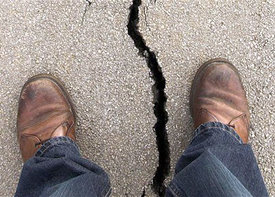 A paper will be presented by US Geological Survey geoscientists at the upcoming meeting of the Seismological Society of America meeting that asserts the following: the injection of fluids into the earth’s crust in the pursuit of natural gas has caused a spate of earthquakes from the southeastern U.S. to the Rockies.
What Pema Chödrön (Unwittingly) Taught Me About Climate Change March 30, 2012
Posted by Jill S. Schneiderman in Buddhist concepts, Buddhist practice, climate change, disasters, earth community, earth system science, mindfulness practice, slow violence.add a comment
This piece is cross-posted on Shambhala SunSpace.
Recently, when I opened my copy of Offerings: Buddhist Wisdom for Every Day for a bit of early morning inspiration, as has become my habit, I found the following insight from Pema Chödrön:
Not causing harm requires staying awake. Part of being awake is slowing down enough to notice what we say and do. The more we witness our emotional chain reactions and understand how they work, the easier it is to refrain. It becomes a way of life to stay awake, slow down, and notice.
Reading it, I couldn’t help but think how relevant her comment is to the situation of North America in March of this year, a month that has felt downright summery. On the college campus where I teach, students have been gallivanting about in shorts, t-shirts and sandals, basking in the warm sunshine, and asking me to hold class outdoors.
It was unseasonably warm around the Ides of March 2012 and I’ve had an appropriate sense of foreboding. On that day The Washington Post reported that hundreds of temperature records had been broken; and the pattern continued for days with unprecedented record heat spanning much of the continental U.S. and Canada. In some places, temperatures were more than 30-40 degrees above normal — breathtaking.
The extent and intensity of the heat wave can be seen on the diagram below, courtesy of NASA’s Earth Observatory, a map that shows just how out of the ordinary these temperatures have been. It shows temperatures of the land surface compared to the same eight-day period of March since the millennium turned. The red color represents areas with warmer than average temperatures while the blue reflects areas that were cooler than usual.

During this balmy spell, I’ve been teaching a course on so-called “natural” hazards. Pema Chödrön’s comment helps me realize how important it is that I enable students and other fellow beings to awaken to the seriousness of this unseasonal surprise. Though in my class I’ve concentrated so far on the more dramatic disasters — earthquakes, tsunamis, volcanic eruptions — the truth is that more human beings died from exposure to heat and drought in the period 1986 to 2008 than from any other type of hazard including floods and tornadoes, among the others I’ve already mentioned. Not far behind heat and drought in the list of leading causes of hazard-related fatalities is winter weather.
Weather-related disasters are unspectacular and slow-moving so they are easy to not notice. We can get caught up in the elation of a summer day seemingly gifted to us ahead of schedule or an October storm that causes celebratory whoops among school children who are seeing their first snow day of the season.
But if we slow down and take notice we learn from studies such as one completed by scientists at the National Center for Atmospheric Research that daily record high temperatures occurred twice as often as record lows over the last ten years across the continental United States. This shows that climate is shifting for if the planet was not warming, there would be roughly equal numbers of record high temperatures and record lows over the last few decades.
Despite the fact that teaching about such hazards can sometimes erode hope, I’m motivated by the desire to do no harm. I realized the other day that there is virtue in paying attention to not only the wrenching disasters but the slow-moving, potentially catastrophic ones. Doing so provides the opportunity to integrate mind and heart, understanding and behavior.
Trackbacks are closed, but you can post a comment.
Falling in Love with “Other” Earth February 27, 2012
Posted by Jill S. Schneiderman in Buddhist concepts, Buddhist practice, environmentalism, mineral resources, science, Thich Nhat Hanh.add a comment
This piece is cross-posted at Shambhala SunSpace.

Photo by Don Farber
In his recent interview with Guardian editor Jo Confino, Zen master Thich Nhat Hanhsuggested that a spiritual revolution is needed so that we might avoid living in a future world torn asunder by societal stresses related to climate change. He characterized such a spiritual revolution as one in which we fall back in love with the planet and see the connection between the Earth and ourselves. In doing so, he says, we will heal the planet.
I had just heard Christian Parenti, contributing editor at The Nation and author of Tropic of Chaos: Climate Change and the New Geography of Violence (2011) speak about the “catastrophic convergence” of climate change and increased social and political violence, and as a result felt convinced that Thich Nhat Hanh’s radical prescription for repair is precisely what we need. But how does one fall back in love with the Earth?
For me, learning about this remarkable planet is an important means to that end. And though I’ve studied the earth for three decades, I continue to understand it in new ways that inspire my devotion. For example, currently I am enamored of a new and unusual framework within which to think about the Earth’s minerals.
In 2008, geoscientist Robert Hazen with collaborating colleagues proposed a radical revision to the way we think about minerals. In the past, mineralogy was considered an ahistorical subject, one in which formation of minerals was viewed as unlinked to the twists and turns of history. In this view, the quartz of today is the quartz of yesteryear, relatively unaffected by the moment in time when the mineral grew.
But Hazen and his colleagues suggested that minerals have evolved over time along with the Earth. Why? As we know from studying meteorites, only about 60 different minerals existed in the materials that came together to form planets and asteroids in Earth’s solar system. Hazen’s group pointed out that today we count more than four thousand minerals on Earth. Through processes such as the formation of oceanic and continental crust, melting, and volcanism, mineral diversity has increased over geological time.
At first, the notion that minerals have evolved in concert with life seems surprising. Since nearly one hundred elements make up the periodic table you might think that an almost infinite number of crystalline compounds might form from the get-go. But different minerals develop only under very particular conditions of pressure, temperature, and concentrations of specific elements.
After initial accretion, the numerically small array of Earth’s minerals were affected by rapidly changing internal temperatures and pressures and external fluctuations in the chemistry of surface waters and atmospheric gases. Thus, according to these researchers, the first minerals combined to birth new mineral species.
Then when life originated on the planet, even more possibilities arose for the evolution of new mineral species because even the simplest organisms– colonies of microbes– metabolized minerals. As life evolved, organisms directly made minerals that served good purposes like shells, bones and teeth. And by the time that photosynthesizing plants caused the atmosphere to have an overabundance of oxygen, indirectly they were responsible for the formation of a multitude of new oxide minerals at the surface of the Earth.
If Hazen and others are right, then minerals evolve along a linear arrow of time; there is no going back to bygone Eons of a limited number of mineral types. Minerals diversify in irreversible manner just as organisms do and I’m excited to think in this new way about these mostly inorganic substances!
What’s more, although reports from the Kepler mission to survey near realms of the Milky Way galaxy and find Earth-size planets around other stars have inspired dreams of finding an Earth-like planet, it seems unlikely that any such planets would look like our blue-green home.
As reported in a recent issue of Nature Geoscience, an array of research contends that ostensibly original environmental features of the Earth in fact appeared late in the planet’s history and were brought about by evolution in the three domains of life with unpredictable contingencies.
These recent developments in the way we think about both minerals and life have caused me to fall in love again with this planet, as Thich Nhat Hanh has urged.
But though I agree with this beloved teacher that we must develop that “insight of inter-being” which concedes the connection between the Earth and ourselves, I differ with this teacher whom I respect and admire, when he refers to our planet as “Mother Earth.”
I believe that harm may come from referring to our planet as “Mother Earth.” Instead, I think it is critical to acknowledge that well into the 21st century we have rendered the planet Other Earth, a system separate and apart from ourselves. In academic parlance, we have “Othered” the Earth–made it into an object rather than a beloved subject. Such acknowledgement is part of the “real awakening, enlightenment, to change our way of thinking and seeing things” which Thich Nhat Hanh advises.
We have distanced ourselves from the Earth. But as Thich Nhat Hanh says, we are the Earth. And,
When we recognize the virtues, the talent, the beauty of (M)other Earth, something is born in us, some kind of connection, love is born. We want to be connected. That is the meaning of love, to be at one. When you love someone you want to say I need you, I take refuge in you. You do anything for the benefit of the Earth and the Earth will do anything for your wellbeing.
The complex interactions between minerals, life, and landscapes of our host planet have enabled our wellbeing. It is up to us to love it in return.
Open Science: Why I Blog January 20, 2012
Posted by Jill S. Schneiderman in science.1 comment so far
On a recent airplane trip I watched Contagion, director Steven Soderbergh’s 2011 thriller in which traveler Beth Emhoff (Gwyneth Paltrow) contracts a deadly virus in Hong Kong and transports it home to the U.S. while other people spread the infection to China, the U.K., and Japan. I couldn’t resist; I was flying and the movie cried out, “Watch Me!” I thought I was called to it as a disaster flick centered on public health and scientific responses to pandemic. But what really grabbed me was the back-story about bloggers.
In the film, Jude Law plays Alan Krumwiede, a freelance Internet journalist or “semi-crackpot blogger” who disparages print journalism and blogs about the pandemic from its inception. Early in the film, Krumwiede is dismissed by Professor Ian Sussman (Elliot Gould) a research scientist working to provide a cell line that might facilitate development of an effective vaccine. Sussman quips “Blogging isn’t writing, it’s graffiti with punctuation.” Though Krumwiede turns out to be a villain in the film, as a blogger I was sympathetic to his plight.
Of course I’m a college professor–a geoscientist–whose job is ostensibly to educate students about earth processes and to publish original research that adds to our understanding about the planet. Also, at the liberal arts college where I’m a professor, interdisciplinary scholarship is valued so I teach and write about gender, history of science, and “the environment.” If tenure and promotion are any guide (and I’m open to debate on that score), I’ve done well over the 25 years I’ve endeavored in this realm. But I’ve encountered the limits of educational liberalism as I’ve grown into a blogger over the last couple of years.
In a regular blog for Shambhala SunSpace I address topics at the intersections of earth science, dharma (teachings of the Buddha), and mindfulness practice. Sometimes the blog takes me into political realms, at other times I reflect on historical and current events, and occasionally I write a book review–all of it infused with a geological gaze. Although my institution’s response to this robust engagement with the blogosphere has been tepid, my enthusiasm for this public arena continues unabated. Here’s why.
To me, blogging is a practice that facilitates my aspiration to be present in the moment. When I blog, I engage with thoughts on the front burners of my brain, if you will. Very often these ideas relate to contemporary environmental issues, problems that affect all beings and require mindful awareness and attentive exchanges. Blogging supports my intention to stay grounded in wisdom and inclined towards benevolence. The Academy may feed my head but the blogosphere also nourishes my heart. Posts have put me in dialogue with some of the most progressive thinkers of our day. I’ve been honored to have had opportunities to think together with artists from Marfa, Texas and musicians in Minnesota, as well as acclaimed journalist and author Naomi Klein and Heinz Award winner Sandra Steingraber–chances that never would have presented themselves had I not put my ideas out into the world in real-time. And my site stats for my personal website, EarthDharma.org, keep me going.
In contrast, though I’m always passionate about fresh topics, devotion wanes as the present becomes the past. In 2010 I researched, wrote and had accepted for publication a peer-reviewed paper on the somewhat forgotten literary naturalist John Burroughs. And although I’ve had the pleasure of discussing the life and work of Burroughs–early champion of Walt Whitman, travel companion of President Teddy Roosevelt, and close friend of historical giants including John Muir and Henry Ford–with a few dozen scholars at conferences, my paper languishes in the queue for print publication. When the paper does eventually appear (promised now for 2012), the handful of people who read “Journeys, Contemplation, and Home: Reflections on John Burroughs in the Caribbean” in peer-reviewed journal that has accepted it, will be a narrow audience out of sync with my intellectual passion and I’ll be well onto other subjects. Does being in sync with my intellectual passion matters to anyone but me? Perhaps.
As reported in the New York Times yesterday, other scientists are drawn to “open science” and the fast communication of ideas that it offers. I’ll be following with interest the sixth annual ScienceOnline conference that begins tomorrow at North Carolina State University. Sessions such as “Networking Beyond the Academy” or “Undergraduate Education: Collaborating to Create the Next Generation of Open Scientists” might put me in touch with other interdisciplinary scientist-educators attracted to post-disciplinary open science.
After blogging for two years, I’m working on turning my posts into a book that examines the dharma as taught by Earth. I know this makes me sound marginal. But that’s okay. According to the theory of punctuated equilibrium, evolution by natural selection occurs when vast periods of stasis are punctuated by the innovations of isolates along the periphery of ecosystems. The disciplinarily-bound Academy has operated the same way for centuries and in our troubled times innovation such as open science operating at the margins of the educational system may be among the changes needed to assure survival of 21st century species.
Cherishing Living Beings — Seen and Unseen January 9, 2012
Posted by Jill S. Schneiderman in Antarctica, Buddhist concepts, earth community, earth system science, environmentalism, fracking, hydraulic fracturing, hydrosphere, ocean pollution, oil spill, science, yeti crab.1 comment so far
This piece is cross-posted at Shambhala SunSpace.

(Image from the first-ever video footage of the newly found Yeti Crab.)
The first time I chanted the Metta Sutta — the Buddha’s teaching on lovingkindness — I was a retreatant at the Insight Meditation Society in Barre, Massachusetts and I got caught up in the inflection marks that appeared above the words; I couldn’t quite figure out when my voice should go up and when it should go down. I felt self conscious about not getting it right and awkward each time we chanted thesutta (in Pali, the language of the Buddha, sutta means “thread” and its presence in the title of a text indicates that it is a sermon of the Buddha or one of his major disciples). Still, at each sit I looked forward to the collective chant. I listened carefully and chanted along with the group following the rhythm, tempo, and pitch. Eventually the sutta seeped into my bones, resonated in my body. In short order, I loved it.
These days, one of my favorite aspects of a retreat with Sylvia Boorstein and Sharon Salzberg is our coming out of silence by reciting together this sutta and discussing the lines we love. Usually my mind settles on “contented and easily satisfied” or “so with a boundless heart should one cherish all living beings.”
For there, seven thousand feet beneath the sea surface, are “black smokers” — hydrothermal vents in the ocean floor — that spew hot, mineral-rich water into cold deep and build chimneys of a sort. Around them, living beings seen and unseen, cluster–species of giant tube worms and clams feeding on microscopic organisms, species sharing this spot on Earth over millions of years.

Not that I’m trying here to suggest that either the microscopic organisms or the larger animals at the vents are sentient and feel what human beings call contentment; rather, these critters are simply eking out a living — making the best out of their (sub)station in life. And I guess that to me, this is another manifestation of the wisdom of the Earth System; at these black smokers we see other beings that live within the constraints of their situation –”contented and easily satisfied.”
I’m inspired by these beings that make their own food not from sunlight (photosynthesis) but from chemicals in the water (chemosynthesis)! They’re not grazing on golden hills like the deer Sylvia has described that wander near Spirit Rock Meditation Center. They are what biologists call extremophiles. They dwell under pressure, in the dark, making their food from the Earth’s hot effluent!
Amazingly, but perhaps not surprisingly given that three-quarters of the Earth is ocean and we’ve explored precious little of the floor beneath, there seem to be plenty of living beings we’ve yet to meet. A few days ago, published research on newly discovered deep sea hydrothermal vents in the Southern Ocean near Antarctica revealed some entirely new species. Check out this previously unknown species of hairy-armed crustaceans called “yeti crabs” living tightly packed together on and around the vents.

In the aftermath of various insults to the salty portion of the Earth’s hydrosphere such as the recent oil spill off the Nigerian coast, and in anticipation of damage from hydrofracking to unknown beings that undoubtedly reside in deep regions of the lithosphere, I offer these observations.
Perhaps one day we may, in the words of the sutta, cherish with a boundless heart all living beings, omitting none.


Trackbacks are closed, but you can post a comment.
Wanting and Breathing December 16, 2011
Posted by Jill S. Schneiderman in contemplative practice, Rabbi Sheila Weinberg.2 comments
My teacher, Rabbi Sheila Weinberg of the Institute for Jewish Spirituality, tells an amusing story in this podcast about taking her granddaughter Hadassah to buy a birthday present for her little brother Yehudah. Listen to it, be amused, and hear some wisdom that applies during this season of consumption.
 earthdharma.org