This Month in the Earth Year: April April 26, 2011
Posted by Jill S. Schneiderman in cyanobacteria, earth community, earth system science, geologic time, geology, science, stromatolites.add a comment
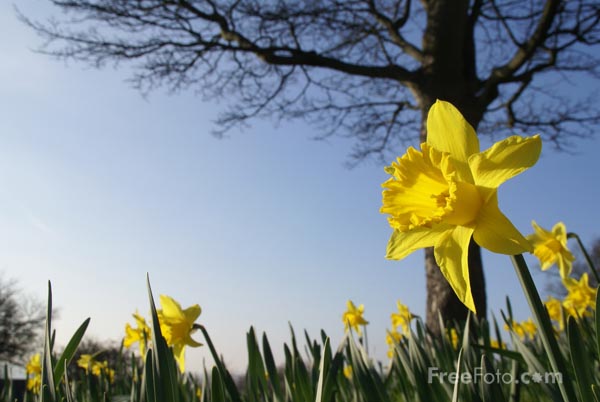
The last bits of snow have disappeared from the piles we plowed this winter and the daffodils have poked up through the defrosting topsoil, so it’s relatively easy to get a sense of time passing in our day-to-day lives. And at this time of year, when some readers may think that, as is often said, the only things certain in life are death and taxes, I’d like to add to that expression the existence of an ever-evolving Earth. For if we take the calendar year as a metaphor for the age of this planet, using January 1 as the date of its formation, by the end of April only 1.5 billion years of Earth history will have transpired. That may seem like quite a bit of time but if we gauge the passing of geologic time by looking for milestones in Earth history, it’s easy to see that Earth time is deep.
April is an auspicious period in the planet’s metaphorical history. The Archean. If you time-traveled to April of the Earth year it’s likely you wouldn’t recognize the Earth as the same planet we inhabit today. The Earth’s crust would have cooled enough so that continents had begun to form, but the similarities to today’s Earth would have ended there. To sustain a visit to the Archean, you’d need to have brought with you a supply of oxygen, for the atmosphere would have been unbreathable. Consisting of methane and ammonia, among other gases, the Archean atmosphere would have been toxic to most of the life that exists on our planet today.
Nonetheless, the first life that appeared on Earth—cyanobacteria— lived in the Archean. 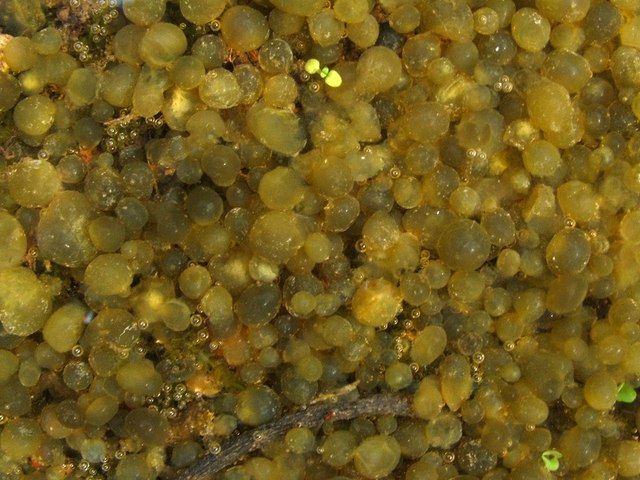 In fact, the oldest known fossils date to this slice of time. The bacteria that grew in the Archean seas left behind large layered mounds called stromatolites that formed as the colonies trapped sediment and secreted calcium carbonate.
 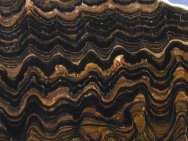 Though stromatolites don’t commonly develop in today’s seas–because too many other organisms are around to eat them–those simple bacteria are still here, like death and taxes.
Radioactivity, science, and spirit March 31, 2011
Posted by Jill S. Schneiderman in book review, Buddhist practice, contemplative practice, disasters, earth community, Japan, meditation, radioactivity, science, Tsunamis.add a comment
This piece is cross-posted at Shambhala SunSpace and at Being.
Radioactivity. Life. Death. These are front-and-center in my thoughts these days as I contemplate the fallout from the nuclear plant meltdown generated by power outages, triggered by a tsunami, set off by an earthquake in Japan. Amidst these events, I turned my attention to reading Radioactive: Marie & Pierre Curie, A Tale of Love and Fallout by Lauren Redniss.
Currently, the book is on exhibit at the New York Public Library. The author, an artist, teaches documentary, drawing, graphic novels, and printmaking at the Parsons School of Design, so one might be excused from not immediately recognizing the logic of her having written a book on the Curies (who shared with Henri Becquerel the1903 Nobel Prize in physics for their research on radiation.) But there’s little that is logical about the way this story reveals itself and that’s what makes it beautiful and such a pleasure to read. The book is a piece of art composed of images and words. Although told in roughly chronological fashion, mostly the story has long tendrils of other tales. In this regard as well as others, I suspect it will be of interest to people fascinated by the intersections of science and mind.
 Here’s what I liked about it. To me, the format ofRadioactive mimics the way a mind—mine at least–works. All of us dedicated to a regular sitting practice know that just a few breaths into a sit, the mind is likely to take an excursion, follow an idea. After some time we wake up to the fact of our distraction and come back to focusing on the breath. It is in this manner that the story of the Curies, their colleagues, friends, enemies, lovers, and offspring unfolds. Unlike histories of science or biographies of scientists that are so often linear and wordy, this one provides multiple pursuable pathways.
Even if they know little else, most people know that Marie Skłodowska Curie was the first woman to be awarded a Nobel Prize. They may also know that her first Nobel in physics was followed by a second in 1911 in chemistry for the discovery of the elements radium and polonium. But the story of Marie and Pierre Curie is much more interesting than that plain fact. It involves a stimulating partnership of spouses engaged by the same scientific questions; infatuation with the invisible; Marie’s scandalous love affair after her husband’s accidental death by horse-drawn carriage; an ongoing commitment to scientific and medical investigations that ultimately killed her, and offspring—both biological and scientific—who have carried on their work. And in Radioactive, entwined images and prose create a fabric that relates the stories of the Curies to more modern-day concerns: Three Mile Island, Chernobyl and two World Wars. Redniss indulges her readers with haunting cyanotype and archival images offered up in nonlinear fashion; this is a boon for right-brainers such as I whose minds tend toward wandering.
A most fascinating facet of the book tells of the Curie’s explorations in Spiritualism—a movement that suggested the possibility of contact with the divine. As Redniss tells it:
Electricity, radio, the telegraph, the X-ray, and now, radioactivity—at the turn of the twentieth century a series of invisible forces were radically transforming daily life. These advances were dazzling and disorienting: for some, they blurred the boundary between science and magic….Spiritualists claimed that clairvoyants possessed “X-gazes,” and that photographic plates placed on the forehead could record vital forces of the brain, or “V-rays.”
The Curies and their circle—including leading artists, writers, and scientists such as Edvard Munch, Arthur Conan Doyle, Henri Poincare, Alexander Graham Bell—participated in the Spiritualist séances of Italian medium Eusapia Palladino and considered it possible to find in spiritualism the origin of unknown energy that might relate to radioactivity. In fact, as Susan Quinn recounts in Marie Curie: A Life, just prior to his death Pierre Curie wrote to physicist Louis Georges Gouy about his last séance with Palladino “There is here, in my opinion, a whole domain of entirely new facts and physical states in space of which we have no conception.”
Both scientists and spiritualists believed that there was much that exists in the world that cannot be seen by the naked eyes of humans.
Radioactive is a story of mystery and magic as well as a history of science and invention. It shows how science, so often thought of as motivated by passionate rationality, is equally about marvelous ambiguity. The Curies, perhaps influenced by their encounters with spiritualism, devoted their lives to the search for evidence of phenomena they could not see but that they believed existed. The implications of what they found—the good and the bad, medical innovation and nuclear proliferation—they couldn’t fully anticipate.
A recent New York Times article about nuclear energy, “Preparing for Everything, Except the Unknown,” states the obvious: experts say it is impossible to prepare for everything. As a mindfulness practitioner I’d like to offer a corollary to that statement: when we sit seemingly doing nothing, plenty happens—we don’t see it, but we sense it. Redniss’s history of the lives of Marie and Pierre Curie inspires me as a scientist to continue to pursue my mindfulness practice.


Trackbacks are closed, but you can post a comment.
The Science of Earthquakes and Tsunamis March 15, 2011
Posted by Jill S. Schneiderman in earthquakes, geology, Japan, science, U.S. Geological Survey.add a comment
For those readers interested in the geoscience behind the events in Japan, I can recommend CoreCast from the U.S. Geological Survey; this episode provides an informative interview with USGS geophysicists Bill Ellsworth and Eric Geist on the mechanisms of the earthquake and tsunami.
The Japan Earthquake: Healing After Trauma March 14, 2011
Posted by Jill S. Schneiderman in disasters, earth community, earth system science, earthquakes, geology, Japan, science.add a comment
This piece is cross-posted at Shambhala SunSpace and Common Dreams.
I just returned from a weeklong spring break field trip in West Texas with my geology students to news of the 8.9 (now upgraded to 9.0) magnitude earthquake, and related 30-foot tsunami, nuclear reactor explosion and meltdowns, and oil refinery fire in Japan. In the El Paso airport on March 12, I picked up a copy of The Wall Street Journal to find out more about the events. The images of buildings, boats and other transport vehicles tossed willy-nilly by seawater—like toys swept aside by a frustrated child—took my breath away; they impressed on me yet again the spatial magnitude of Earth’s powerful forces.
I appreciated the clear rendering of the mechanisms of the quake and consequent tsunami— subduction of the Pacific plate beneath this outpost of the North American plate with massive uplift of the seafloor and displacement of voluminous amounts of seawater. Reporters for the Journalcontextualized the historic proportions of the seismic event (the fifth-largest recorded earthquake in the past century and the biggest in Japan in three hundred years); they lauded the country’s high degree of earthquake preparedness.
What struck me most, however was the extensive coverage of the economic implications of the quake for the global economy and speculations about how quickly life in and beyond Japan could get back to normal especially in terms of industrial and technological production. Of course I realize that business and financial news is that paper’s focus, nonetheless, I’d like to take the opportunity offered by this recent cascade of events to highlight a lesson that I think the Earth offers about reactions to stresses that can traumatize all living beings.
As readers of this blog know, I’m a seeker of Earth dharma—examples of Earth processes that resound with the wisdom of dharma teachers. For me, this recent temblor echoes teachings related to the devastating effects of the build-up of stress on a body and mindful approaches to healing.
In this seismic event, a locked fracture at the juncture of two lithospheric plates caused strain to accumulate in the rocks beneath the sea near the east coast of Honshu, Japan. It was released catastrophically as images of demolished landscapes and towns continue to show. As one geophysicist put it, “the rocks cracked under the pressure.”
I find it impossible not to take this as a metaphor for the effect on the human body of stress accumulated over the long-term and extract from it ideas about the delicacy of healing after such crises on earth. I’m sure others must have the same impulse but I feel especially inclined to it just coming off this field trip which took me to, among other places, Carlsbad Caverns (in New Mexico, just over the Texas border).
The moist, cool, subterranean world of Carlsbad Caverns beneath the rugged, desert landscape is an unparalleled realm of colossal chambers and extraordinary cave formations (known to geologists as speleothems). Formed a few million years ago by the dissolution of parts of a much older reef—the remains of sponges, algae and other marine invertebrate organisms that lived during the late Paleozoic—and then decorated beginning around 500,000 years ago, drop by drop, with crystals of calcite, steep passages connecting horizontal levels provide access to the Earth’s shallow interior.
While walking along the dimly lit paths through the caverns, I pointed out to one my medical school-bound students, “popcorn” speleothems precipitated so as to resemble, in my view, the alveoli of human lungs.
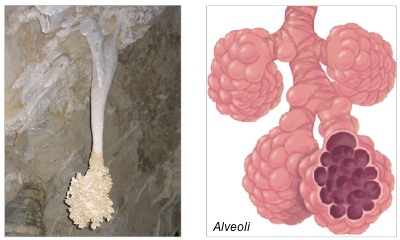
She marveled at the formation along with me. Then, further down the trail commented, “I feel like I’m walking inside the body of the Earth.” I couldn’t have agreed more.
Upon learning of the Japan quake, President Obama said at a news conference, “Today’s events remind us of just how fragile life can be.” Ostensibly sturdy, our Earth and all living beings on it are really quite delicate. The Prime Minister of Japan asserted that the current situation is the most severe crisis the country has faced since World War II and one that, in his words, will require people to join together in order to overcome the catastrophe. I agree that people will need to cooperate with one another but I think also that the current situation requires honesty (what is happening at those damaged reactors?) and patience. Is a focus on the possible effects of the catastrophe on the global economy a compassionate first response?
This portion of the Earth and the people who live there have experienced what my colleague David Applegate, senior science adviser for earthquakes at the U.S. Geological Survey has called a “low probability, high consequence” event. Foremost among my responses to the crisis, fresh from my recent intimate encounter with the Earth, is the wish that all living beings effected by this trauma be healed over the course of time.
The Earth trembles Down Under February 24, 2011
Posted by Jill S. Schneiderman in Buddhist concepts, disasters, earthquakes, geology, science, Sylvia Boorstein.1 comment so far
This piece is cross-posted at Shambhala SunSpace.
When asked in an interview for Third Age, what is mindfulness, Sylvia Boorstein answered, “The practice of mindfulness is the practice of paying attention in every moment of one’s day. It’s the balanced recognition of the truth of the moment.” I find this comment especially relevant in the aftermath of the magnitude 6.3 earthquake on the South Island of New Zealand that has caused havoc in Christchurch since it occurred on February 21.
The images of crumbled buildings, the injured and dead, remind me to pay attention to the truth of the moment: human tenancy on Earth is tenuous. The latest news reports state that at least 76 people died in this event — a small number when compared to the thousands hurt and killed after the January 2010 Haitian quake or the April 2010Yushu quake in Southern Qinghai. Nonetheless, this devastating aftershock of the magnitude 7.1 earthquake in New Zealand on September 3 reminds me that the earth behaves consistently and, as in words attributed to historian Will Durant, “civilization exists by geological consent subject to change without notice.”
As I have written previously for this blog, earthquakes occur at lithospheric plate boundaries, the relatively flexible seams that connect pieces of essentially inflexible crustal material that constitutes the Earth’s surface. New Zealand seismicity is associated with deformation as the Pacific and Australia plates interact. When the Earth’s rigid crust moves, energy stored in crustal rocks is released and the rocks rupture. But the Earth’srigid crust always moves.
Rates of lithospheric spreading and convergence — science-speak for the pace at which continents and ocean basins get torn apart or crash together — on the order of centimeters per year are perhaps so slow that human beings don’t notice the relentless motion or the associated smaller magnitude releases of energy. Other living things, however, are more sensitive than we. In southern Guangxi province of China, the director of the earthquake bureau reports that as they pursue the elusive goal of earthquake forecasting scientists monitor the behavior of snakes.
In the first half of this month, Earth has experienced at least 8 (February 2) and as many as 26 (February 4) earthquakes each day! Usually only the bigger ones involving human casualties and economic losses get reported. By paying attention to what the Earth tells us daily in myriad ways via varied processes, seismic and otherwise, human beings can, in Sylvia’s words, recognize the truth of the moment — all life on this planet is fragile.
Trackbacks are closed, but you can post a comment.
Bringing a “Whole New Mind” to the BP Oil Catastrophe July 28, 2010
Posted by Jill S. Schneiderman in book review, BP/Deepwater Horizon oil catastrophe, Dalai Lama, fossil fuel, neuroscience, oil, science.add a comment
This piece is cross-posted at Shambhala SunSpace and truthout.
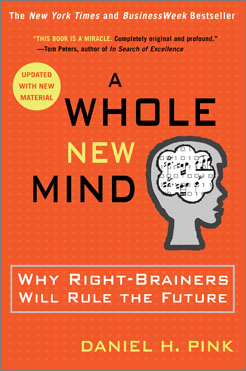
I recently picked up — and couldn’t stop reading — Daniel Pink’s A Whole New Mind: Why Right-Brainers Will Rule the Future, because I reside with three of his so-called “R(ight brain)-directed” thinkers, and as a scientist I’ve lived most of my professional life in a “L(eft brain)-directed” world. So, though I was motivated by personal reasons to entertain Pink’s hypothesis, I was surprised to find currency in his book for two domains that preoccupy me: Buddhism and earth science.
Pink, a former speechwriter for Al Gore, argues that we now live in the dawning of the “Conceptual Age”—that which has succeeded the Information and Industrial Ages respectively—and that the skills necessary for survival in this age are, roughly put, art and heart.
Pink draws on functional magnetic resonance imaging (fMRI) data, well-known to Buddhists interested in neuroscience, that show how the left and right hemispheres divide their labor: the left hemisphere handles logic, sequence, literalness and analysis while the right hemisphere processes and synthesizes emotional expression, metaphor, context, and “the big picture.” Pink uses these data to argue that L-directed aptitudes while necessary, are no longer sufficient for leading satisfactory lives in the Conceptual Age. R-directed talents including artistry, empathy, taking the long view, and pursuing the transcendent — which were undervalued during the Information Age — are now essential. Pink asserts that the requisite abilities—he characterizes them as “Design, Story, Symphony, Empathy, Play and Meaning”—are fundamentally human attributes, things we do out of a sense of intrinsic motivation, that reside in all of us and need only be nurtured into being.
In the chapter titled “Meaning,” Pink refers to the Dalai Lama’s comment at a Mind and Life Institute press conference: “Science and Buddhism are very similar,” he said, “because they are exploring the nature of reality, and both have the goal to lessen the suffering of mankind.” Pink aims to urge the importance in the Conceptual Age of taking spirituality seriously. He offers up examples of ways of doing so—medical schools that teach their students to take “spiritual histories” of patients; village greens, prisons, universities, and hospitals with incorporated labyrinths; employees who articulate hunger for bringing spiritual values—meaning and purpose—to their workplaces as documented in a University of Southern California business school report (A Spiritual Audit of Corporate America).
I bring up spiritual values and business because BP is replacing Tony Hayward, the company CEO who presided over attempts to cap the Gulf of Mexico deep sea oil gusher, with a new CEO: Bob Dudley, who says he will put safety at the center of future exploration. Dudley has spoken of the need to restructure and reorganize in order to advance this goal.
But safety is a value—a deeply held belief that is beyond compromise; if my reading of Pink is on target, BP’s new CEO, and other oil professionals are going to have to enlist “whole minds” to embrace truly safety as a value. Robots run by computers — inventions of the information age — have worked to cap the well but it took months. Many reasons explain the absence of a fast fix, among them the fact that robots and computers can feel no empathy, don’t see “the big picture,” can’t handle context, and don’t work creatively; and approaches to the calamity sprang primarily from L-directed thinking of oil professionals—logic, sequence, and analysis.
If BP enlisted R-directed thinkers and got the benefit of what Pink calls their “high concept-high touch” abilities—emotional intelligence, imagination and creativity—could the company (and others like it), move “Beyond Petroleum,” (BP’s recent and now-ironic) marketing slogan? In The New Division of Labor: How Computers are Creating the Next Job Market, economists Frank Levy and Richard Murnane write that the future belongs to people who excel at expert thinking (solving problems for which there are no rules-based solutions) and complex communication (persuading, explaining, and conveying information). The solution to the BP disaster and future crises like it will not be a new design for deepwater drilling. Rather we’ll need imaginative, emotionally intelligent, R-directed professionals working alongside L-directed professionals in the oil industry. But that’s not all. And in order to make my point I’ll refer to the myth of Pandora, a story I’ve previously found useful in connection with the Gulf of Mexico oil catastrophe.
According to the legend, Pandora opened her jar—a gift from Zeus—and the evil it contained escaped and spread over the earth. Pandora hurried to close the lid, but the entire contents of the jar had escaped, except for hope. I’d like to argue that the analogous gift that “Pandora’s Well” might still release is the human valuing of right hemisphere brain functions—synthesis, emotional expression, metaphor, and context; if so, with regard to human use of fossil fuels, we have the possibility of acting on “the big picture” with a whole new mind.
Trackbacks are closed, but you can post a comment.
Buddhism and Science: Kin by Water July 15, 2010
Posted by Jill S. Schneiderman in Barbados, contemplative practice, earth cycles, earth system science, Francisco Varela, hydrologic cycle, hydrosphere, ice cores, meditation, Rabbi Jeff Roth, Rabbi Sheila Weinberg, science.add a comment
This piece is cross-posted at Shambhala SunSpace

Dr. Francisco Varela (1946-2001), a neuroscientist and Buddhist practitioner involved intimately in the initiative to foster dialogue and collaboration between modern scientists and Buddhist contemplatives, commented that Buddhism, as an outstanding source of observations concerning human mind and experience accumulated over centuries with great theoretical rigor, is an uncanny complement to science.
Appreciating this, Varela and others were able to cultivate a unique forum, the Mind and Life Institute, that for two decades has led conversations between the Dalai Lama and other Tibetan Buddhists and scientists, first from the realms of cognitive psychology and neurobiology and more recently, from physics and cosmology. In his essay “The Importance of the Encounter with Buddhism for Modern Science,” Varela wrote that the natural meeting ground between science and Buddhism is the place where we put together the data from scientific empiricism with the inner examination of human experience. When writing this, Varela had in mind particularly neuroscience, but I believe that earth science may also provide a fertile commons. Allow me to elucidate.
The other day, the sea drew me down the coral escarpment behind my apartment in Barbados for my morning sit. I walked downstairs and across the lawn, now turned emerald with the arrival of the rainy season. I swung outward the heavy iron gate—hinges squeaking—that opens onto the blue water of James Bay. The tide, on its way out, exposed squat, wave-washed pedestals of coral. I walked south with the sea on my right glittering aqua in the early morning sunshine, and found my seat—the water-worn stump of a tree whose girth suggested old age. I rooted my “sit bones” in the sand, my back touched gently what remained of the tree trunk, and I focused my attention on my breath.
Per instructions from my mindfulness teachers, Rabbis Sheila Peltz Weinberg and Jeff Roth, I had reflected all week on the question “Who am I in relation to sensations, feelings, and thoughts that arise and pass from moment to moment?” It arose in shortened form as a mantra during my meditation. With my eyes lightly shut, I saw the waves pulling the coralline sand and cobbles back into the sea, reclaiming that material—the solid calcium carbonate—that it had itself once produced collaboratively with the invertebrate organisms whose home is the sea.
My breathing felt fast and shallow. Was I anxious? Would I be able to settle myself here without my cushion? Worried mind hindered me. I began again. After some time my breathing came more slowly and from deeper down in my body. Along came another distraction familiar to any beachgoer—bugs. Were ants crawling on my leg? Had a fly landed on my neck? I felt annoyed and chastised myself for having chosen an inappropriate place to meditate. Had I deliberately set myself up for failure? Recognizing that I was again beset by another hindrance—doubt—I began again, again.
As I brought my awareness to my body, I discovered that the prickly sensation on my skin was not caused by crawling insects but by my own sweat—droplets of water leaving me. An answer to the question “What am I” became clear; I am part of the hydrosphere. The realization startled me. I already understood myself and other human beings as part of the biosphere, geosphere and atmosphere—the three of the four great interacting spheres that make up the Earth System. As with any living organism, some day I will become part of the solid substrate at the earth’s surface. Through my respiration I participate in the cycling of oxygen and carbon dioxide throughout the atmosphere. But I had not previously conceptualized myself as part of the hydrosphere—surprising, given that more than half of the human body is water.
Of course I know intellectually how we humans interact with the hydrologic cycle—how we commandeer water for industrial, agricultural and domestic purposes. But during this sit I realized myself to be one of the reservoirs of the hydrosphere, albeit a miniscule one. The hydrologic cycle is simple: precipitation falling from the atmosphere as snow accumulates in glaciers and ice caps—though these days there’s more melting than accumulating going on; rainwater from clouds along with meltwater from glaciers become streams, rivers, and lakes—“surface water” in geological parlance; that water soaks into the soil and percolates downward to become groundwater and soil moisture, or it gets incorporated into living matter; ultimately it all flows back to the oceans. Evaporation of water into the atmosphere occurs throughout the hydrologic cycle, but especially from the ocean—the largest of all the reservoirs—and the cycle begins again.

Geologists know empirically something of the history of fossil waters—essentially water entombed for long periods of time in one part of the hydrologic cycle, most typically in the form of groundwater —from studying the oxygen isotopic composition of fluids in geological artifacts such as slices of Antarctic ice (H2O) cores and calcite (CaCO3) in sand-sized deep marine fossils called foraminifera. Put simply, some elements—isotopes—occur as two varieties of the same substance one of which is slightly heavier than the other. Remember Goobers and Raisinets? As chocolate-covered fruits, they are arguably the same confection. (I’m one to pass on the raisinets, preferring the goobers, but this isn’t the venue for detailing their respective virtues). Yet, the goobers are heavier than the raisinets because their insides differ. The same is true for oxygen. One variety of oxygen is the light “oxygen-16” (O16) while another is the heavy “oxygen-18” (O18); they are isotopes of oxygen just as raisinets and goobers are isotopes of chocolate candies—sort of. And if you’ve persisted in following me this far, thank you, and hang in there for I intend to make good on the promise of linking earth science and Buddhist thought.
When water evaporates from oceans, it’s the lighter H2O16 that gets incorporated preferentially into clouds. Therefore, during cold periods in the geological past, when more water is stored in ice caps, seawater concentrates H2O18 in it. That is, since it’s harder for H2O18 to get lifted up into the atmosphere, so to speak, it gets left behind in the ocean. By analogy, think of whether you’d rather heft your jacket or suitcase into the overhead compartment in an airplane and you’ll understand why some heavy items—not all—remain “stowed beneath the seat in front of you” while the lighter ones go into the upper bins. When paleoclimatologists investigate the cold periods in earth history—glacial ages— when more of the hydrosphere’s water stays sequestered in ice, they find that ice core samples from these cold times have more H2O16 in them than they do H2O18. In like manner, calcium carbonate from ice-age foraminifera, tends to be relatively enriched in O18 (as well as the heavier of two carbon isotopes). Paleontologists analyzing their composition find they have relatively more CaC(O18)3 than CaC(O16)3 . It’s clever science but unarguably esoteric business, this isotope geochemistry. It requires ice cores kept frozen from Antarctica to lab, analysis of fluid bubbles enclosed in the ice, and specialized machines called mass spectrometers that can measure miniscule differences in the weight of oxygen atoms. It also requires mathematical calculations that I found tedious in graduate school. Still, all of that is not as difficult as staying focused on my breath.
I sat sweating, and the water droplets from my body connected me to the hydrosphere. Where had that water been before—the water that makes up me? Was part of me once a glacier? Was I a mountain stream? What tale might the oxygen isotopic signature of my bones, calcium phosphate (PO4) tell?
As the perspiration dripped down my shins, it disappeared in the pores between unconsolidated beach sand. Water from the reservoir of me meandered to the sea as moisture between sand grains. The sweat trickling down my spine slid down my back and disappeared into the wood of the tree stump. This “Jillwater” will remain for some time in the soggy wood and won’t soon join the vast oceanic reservoir of the hydrosphere. I finished my sit and rose slowly.
I walked to the water’s edge and felt its cool wetness envelope my toes, the soles of my feet, my ankles and shins. The sea sipped directly the sweat from my skin. These droplets that have eked out of me flowed unimpeded to the ocean. As seawater may one day become part of an ice cap, the water from me will be a drop in the sea.
The dialogue between science and Buddhism has the potential to develop specific interventions that could promote not only psychological and physical wellbeing but planetary health too. Modern earth science allows that human beings interact with the earth system and, to a degree, try to serve as stewards of the planet. But Buddhism offers earth science the possibility of a more unified understanding of the Earth, a science that frames humans as kin rather than stewards of the planet.
See also:
- More “Earth Dharma” posts by Jill S. Schneiderman
- “Two Sciences of Mind” — Barry Boyce on Francisco Varela, “a walking Buddhism-science dialogue.”
 earthdharma.org